
People
Authors worth following
The people behind the newsletters, guides, and channels I keep recommending — sorted into seven lanes so you can go straight to the ones doing the work you care about. Each profile is pulled from their own site, with everything of theirs in the hub gathered in one place.
Want real context beyond a name and a title? In their own words links one genuine interview or talk for each of these people.
Browse by role or field
Reference
Who’s Who in AI
The people shaping how AI gets built, deployed, and debated — company leaders, researchers, and critics alike, presented without ranking one side as right. Each profile lists what they argue, what they’ve built, and what they’ve published.
201 profiles, drawn from the AI & Technology and Ethics in AI & Tech lanes below.
Start here if the jargon is new
The AI Terminology Decoder defines and sources the technology, the movements and the slang used throughout these profiles — 224 entries, each with where the term came from.
Open the AI Terminology DecoderWhat these researchers are arguing about
AI Ethics Explained walks through 9 core principles, 8 documented risks and the questions to ask before you trust a tool — each one tied back to these profiles and to a paper you can read free.
Open AI Ethics ExplainedFrontier model leaders
Aidan Gomez
Cohere co-founder, CEO and transformer co-author
Co-authored the transformer paper “Attention Is All You Need” while at Google Brain, then co-founded Cohere in 2019. His work spans enterprise language models, multilingual research and open scientific collaboration.

Andrej Karpathy
Founding OpenAI member, former Tesla Autopilot lead, now pretraining research at Anthropic
Teaches deep learning from first principles — his neural-network and LLM lecture series are among the clearest technical explanations available anywhere. Coined "vibe coding" in 2025.

Arthur Mensch
Co-founder and CEO of Mistral AI
Former DeepMind researcher who co-founded Mistral AI in Paris in 2023. Mistral publishes several of its models under open weights and is the most prominent European frontier lab.

Dario Amodei
Co-founder and CEO of Anthropic
Physicist turned AI researcher, formerly VP of research at OpenAI, who co-founded Anthropic in 2021 with his sister Daniela and a group of colleagues. He writes at length about both the upside of powerful AI and the risks of racing toward it.

Demis Hassabis
Co-founder and CEO of Google DeepMind
Chess prodigy, game developer and neuroscientist who co-founded DeepMind in 2010. He shared the 2024 Nobel Prize in Chemistry for AlphaFold and leads Google's combined AI research organization.
Greg Brockman
OpenAI co-founder and president
Co-founded OpenAI in 2015 after serving as Stripe's chief technology officer. He has led engineering and product work across OpenAI's research infrastructure, API, Codex and ChatGPT-era systems.
Coach’s note: Read him for what the company believes about its own systems, in his own words — his long interviews are unusually specific about engineering. He is not a neutral witness: OpenAI's valuation depends on these systems being seen as close to general intelligence, and his claims about safety work are almost never accompanied by outside verification.

Ilya Sutskever
Co-founder of Safe Superintelligence Inc.
Co-author of AlexNet and a co-founder and former Chief Scientist of OpenAI. After leaving in 2024 he founded Safe Superintelligence Inc., a lab stating a single product goal and no intermediate commercial releases.
Jared Kaplan
Physicist and Anthropic co-founder behind the neural scaling laws paper
A physicist, professor at Johns Hopkins and co-founder of Anthropic. His 2020 paper established the scaling laws: the observation that model performance improves predictably with more data, parameters and compute.
Coach’s note: In the glossary for Scaling Laws.

Jensen Huang
Co-founder, President and CEO of NVIDIA
Leads Nvidia, whose chips underpin most frontier AI development. Speaks regularly about the computing behind AI and where the industry is investing.
Koray Kavukcuoglu
Chief technology officer of Google DeepMind
Chief technology officer of Google DeepMind and one of the leaders behind its Gemini models. He joined DeepMind in its early years as a researcher and went on to lead its reinforcement-learning work, including the systems behind AlphaGo, before taking charge of the company's research organization.
Liang Wenfeng
Founder of DeepSeek
Founder of the quantitative hedge fund High-Flyer and of DeepSeek, the Chinese lab whose openly released R1 reasoning model in January 2025 prompted a global reassessment of what frontier training costs.

Mira Murati
Founder and CEO of Thinking Machines Lab
Former Chief Technology Officer of OpenAI, where she led work on ChatGPT, DALL-E and GPT-4, and briefly served as interim CEO in 2023. She left in 2024 and founded Thinking Machines Lab in 2025.
Mustafa Suleyman
CEO, Microsoft AI; co-founder of DeepMind and Inflection AI
Co-founded DeepMind in 2010 and led its applied and ethics work, then founded Inflection AI before joining Microsoft in 2024 to run its consumer AI division. Author of "The Coming Wave" and a widely watched TED talk arguing that AI should be treated as a new kind of species rather than a tool. He argues for containment and oversight while running one of the largest AI deployments in the world — read him with that tension in mind.
Coach’s note: His writing is the clearest statement of the "powerful and dangerous, build it anyway, with guardrails" position. Useful precisely because he is not a critic — you get the industry's own best case for itself, from someone whose employer profits if it wins.

Sam Altman
CEO, OpenAI
Leads OpenAI, the company behind ChatGPT. Writes periodically about AI's trajectory and the tradeoffs between capability and safety.
Sam McCandlish
Researcher, Anthropic
Researcher at Anthropic, previously at OpenAI, where he led work on scaling laws — the finding that model performance improves predictably with compute, data and size. Co-author of the GPT-3 paper.

Satya Nadella
Chairman & CEO, Microsoft
Shares perspective on enterprise AI adoption, cloud computing, and the broader direction of the tech industry. Coach's note: Worth watching to understand where big employers are placing their AI bets.

Sundar Pichai
CEO, Google & Alphabet
Commentary on AI research, product launches, and the technology industry's trajectory from one of its most influential leaders. Coach's note: High-level signal on where AI products are heading next.

Yann LeCun
AI researcher; founder, AMI Labs
Deep learning researcher who left Meta in 2026 to found AMI Labs, pursuing an alternative to today's large language models.
Innovators & disruptors

Alexandr Wang
Chief AI Officer at Meta; founder of Scale AI
Founded Scale AI at 19 to supply labeled training data to AI labs and governments. In 2025 Meta invested in Scale and he joined to lead Meta Superintelligence Labs.
Anton Osika
Co-founder and CEO of Lovable
Swedish entrepreneur and former CERN physicist. Co-founded Lovable in 2023, the AI app-building platform that lets people describe software in plain language, and previously co-founded the AI startup Depict.ai.
Asha Sharma
CEO of Xbox; former President of Product for Microsoft's AI platform
Business executive who led Microsoft's AI platform product organization from 2024 to early 2026, spanning Azure AI, GitHub and Visual Studio Code tooling. Became CEO of Xbox in February 2026. Earlier served as COO of Instacart through its IPO, led Meta's Messenger and private-communication products as VP of Product, and was COO of Porch Group.
Charlie Kawwas
President of Broadcom's Semiconductor Solutions Group
Semiconductor executive who leads Broadcom's chip divisions, including the custom AI accelerators co-designed with large AI customers such as the OpenAI partnership announced in October 2025. Previously Broadcom's chief operating officer; joined through the LSI acquisition after senior roles at LSI and Nortel. Three-time Concordia University graduate.
David Sacks
Venture capitalist; White House AI and crypto czar
Entrepreneur and investor, co-founder of Craft Ventures, early PayPal executive and founder of Yammer. Appointed White House AI and crypto czar in 2025, where he has argued against state-level AI regulation and for lighter federal rules. Co-host of the All-In podcast.
Diogo Almeida
Co-founder & CEO, TypeSafe AI; ex-OpenAI and Google Brain
Worked at OpenAI from 2020 to 2024 on instruction following — the InstructGPT and RLHF work behind ChatGPT and GPT-4 — after research at Google Brain and data science at Enlitic. He now runs TypeSafe AI, which builds language models aimed at reliable, low-cost automation without a human checking each step. His talks focus on the gap between AI hype and what holds up in production.

Elon Musk
Founder and CEO, Tesla, SpaceX and xAI
Runs Tesla, SpaceX and the AI company xAI, and owns X. One of the most visible public voices on where AI is heading and what it risks.
Erik Gafni
Software engineer, AI infrastructure
Software engineer and open-source contributor working on AI infrastructure and tooling. This profile is a stub based on limited public information and should be checked for accuracy.
Erik Torenberg
General partner at Andreessen Horowitz
General partner at Andreessen Horowitz focused on investing and the firm's marketing and ecosystem teams. Previously founded On Deck, the Turpentine podcast network and Village Global.
Jeff Bezos
Co-CEO of Prometheus; founder and executive chair of Amazon
Founder of Amazon (CEO until 2021) and Blue Origin. In November 2025 he co-founded the AI startup Prometheus with Vik Bajaj, where he serves as co-CEO; the company is building AI tools to speed up engineering and manufacturing of physical products.
Jeff Yan
Founder of Hyperliquid
Founder of Hyperliquid, a decentralized exchange for perpetual futures that grew to hundreds of thousands of users with no venture funding and a small core team. Former competitive physics medalist, Harvard mathematics and computer science graduate, and high-frequency trader at Hudson River Trading before founding crypto trading firm Chameleon Trading. Speaks rarely in public.
John Ternus
Senior Vice President, Hardware Engineering, Apple
Apple's head of hardware engineering, overseeing the teams behind the iPhone, iPad, Mac and AirPods. Joined Apple's product design team in 2001 and joined the executive team in 2021. Widely reported as a leading candidate to succeed Tim Cook as CEO.
Kai-Fu Lee
Author of AI Superpowers; founder of 01.AI and Sinovation Ventures
Former head of Google China and Microsoft Research Asia, now a venture investor and author who writes about the US-China AI landscape and the labor effects of automation.
Larry Page
Co-founder of Google; Alphabet board member and controlling shareholder
Co-founded Google with Sergey Brin in 1998 and co-created the PageRank algorithm. Was CEO of Google (1997–2001, 2011–2015) and of Alphabet until December 4, 2019, when he and Brin left their executive roles; he remains an Alphabet board member and one of its two controlling shareholders (Wikipedia). Business Insider reported in March 2025 that he backs Dynatomics, a Palo Alto startup applying AI and 3D printing to aircraft manufacturing. Listed here because the decisions that put AI at the center of Google — the DeepMind acquisition and the "AI-first" strategy — were made under his leadership.
Coach’s note: The founders' letters are the primary source worth reading — his own words, dated, rather than someone's retelling. Two honest caveats: they are shareholder documents, so they present the company at its best, and much of what circulates about his personal views on machine intelligence comes second-hand from other people's books and interviews. Treat those quotes as reported, not verified.

Marc Andreessen
Co-founder, Andreessen Horowitz (a16z)
Venture investor and author of the "Techno-Optimist Manifesto," a prominent argument for accelerating AI development.
Palmer Luckey
Founder, Oculus & Anduril
Founded Oculus at 19 and sold it to Facebook; now runs Anduril, which builds autonomous defense systems. A prominent voice on AI in military hardware and on American tech competitiveness.
Ray Kurzweil
Inventor and futurist
Built early optical character recognition, text-to-speech and music synthesizer technology.

Reid Hoffman
LinkedIn co-founder, investor and AI author
Co-founder of LinkedIn, partner at Greylock, early investor in OpenAI and co-founder of Inflection AI. He writes and podcasts about AI as an amplifier of human capability.
Sasha Sheng
Engineer at Anthropic
Engineer working on Claude at Anthropic, focused on the engineering practice of making large language models reliable in real products. This profile is based on limited public information and should be checked for accuracy.
Sriram Krishnan
Former Senior White House Policy Advisor on AI
Tech executive and investor who served as Senior White House Policy Advisor on Artificial Intelligence from January 2025 to June 2026. Earlier held product roles at Microsoft, Meta, Snap and Twitter, and was a general partner at Andreessen Horowitz.
Steven Hao
Co-founder & CTO, Cognition (Devin)
Co-founder and CTO of Cognition, the company behind Devin, the AI software engineer. Earlier he was a senior engineer at Scale AI and a competitive-programming standout (IOI gold medallist).
Vik Bajaj
Co-CEO of Prometheus; CEO of Foresite Labs
Scientist and executive who co-founded Google Life Sciences (now Verily), was chief science officer of GRAIL, and leads the AI incubator Foresite Labs. Co-founder and co-CEO of Prometheus with Jeff Bezos, and an adjunct professor at Stanford's School of Medicine.
Vinod Khosla
Authors, bloggers & reporters
3Blue1Brown
Grant Sanderson — animated maths explainers behind the clearest neural-network intuition on the internet
Visualises linear algebra, calculus, neural networks and transformers through animation-driven intuition rather than rote formulas. Built the open-source Manim animation engine.
Adam Becker
Astrophysicist and author
Astrophysicist, author and science writer.
AI Explained
In-depth analysis of frontier AI model releases, benchmarks, and capability claims
Hosted by Philip. Coach's note: The best check against hype when a new model drops.

Andrew Ng
Founder, DeepLearning.AI; Co-founder, Coursera
One of the most followed AI educators globally, sharing accessible breakdowns of AI developments and free learning resources. Coach's note: Follow him for plain-English AI explanations and pointers to free courses you can actually finish.
Angela Saini
Science journalist and author
British science journalist and broadcaster who has reported for the BBC and written for The Guardian, New Scientist and Wired UK.
Ben Tossell (Ben's Bites)
Founder-turned-investor writing a widely-read AI newsletter covering new tools, launches, and what is actually useful
Coach's note: The fastest way to stay current on AI tools without living on social media. Skim it weekly, try one tool.
Bernard Marr
Strategic Business & Technology Advisor, Author
High-level, accessible summaries of emerging enterprise technology and industry trends for business leaders. Coach's note: Good plain-language briefings if you need to talk tech trends in interviews.

Casey Newton
Founder of Platformer; co-host of Hard Fork
Independent technology journalist who founded the Platformer newsletter after years at The Verge, covering AI labs, platform power and content moderation. Co-hosts Hard Fork with Kevin Roose.

Cassie Kozyrkov
Founder of Decision Intelligence (ex-Google)
Explains AI and data science through a decision-making lens, with a focus on avoiding common analytical errors before deploying AI. Coach's note: Read her if you work with data and want to avoid confident-but-wrong conclusions.
David Gerard
Author and tech skeptic
Australian IT systems administrator and author of Attack of the 50-foot Blockchain (2017) and Libra Shrugged (2020).
David Langer (The DIY Data Scientist)
Analytics and Excel teacher helping professionals build real data skills and use AI to increase their impact at work
Coach's note: A good fit if you want data skills without a bootcamp. His lessons are built around work you actually do in a job.
Elizabeth Sandifer
Writer, Eruditorum Press
Writer and publisher at Eruditorum Press.
Ethan Mollick
Associate Professor, Wharton School
Leading voice on the practical, everyday application of generative AI tools at work, author of 'Co-Intelligence.' Coach's note: The best source for how to actually use AI in your day-to-day work, with real prompts and tests.
Fireship
Fast-paced explainers on AI coding tools, developer workflows, and software trends
Hosted by Jeff Delaney. Coach's note: Fastest way to learn what a tech term actually means.
Jack Clark
Co-founder, Anthropic; writer, Import AI
Co-founder of Anthropic and head of policy there. Writes Import AI, a long-running weekly newsletter on AI research and policy, and co-chairs the AI Index steering committee at Stanford HAI.

Karen Hao
Author of Empire of AI; investigative AI reporter
Former senior AI editor at MIT Technology Review and reporter for The Wall Street Journal and The Atlantic. Her 2025 book Empire of AI investigates OpenAI, data labor and the resource costs of large models.
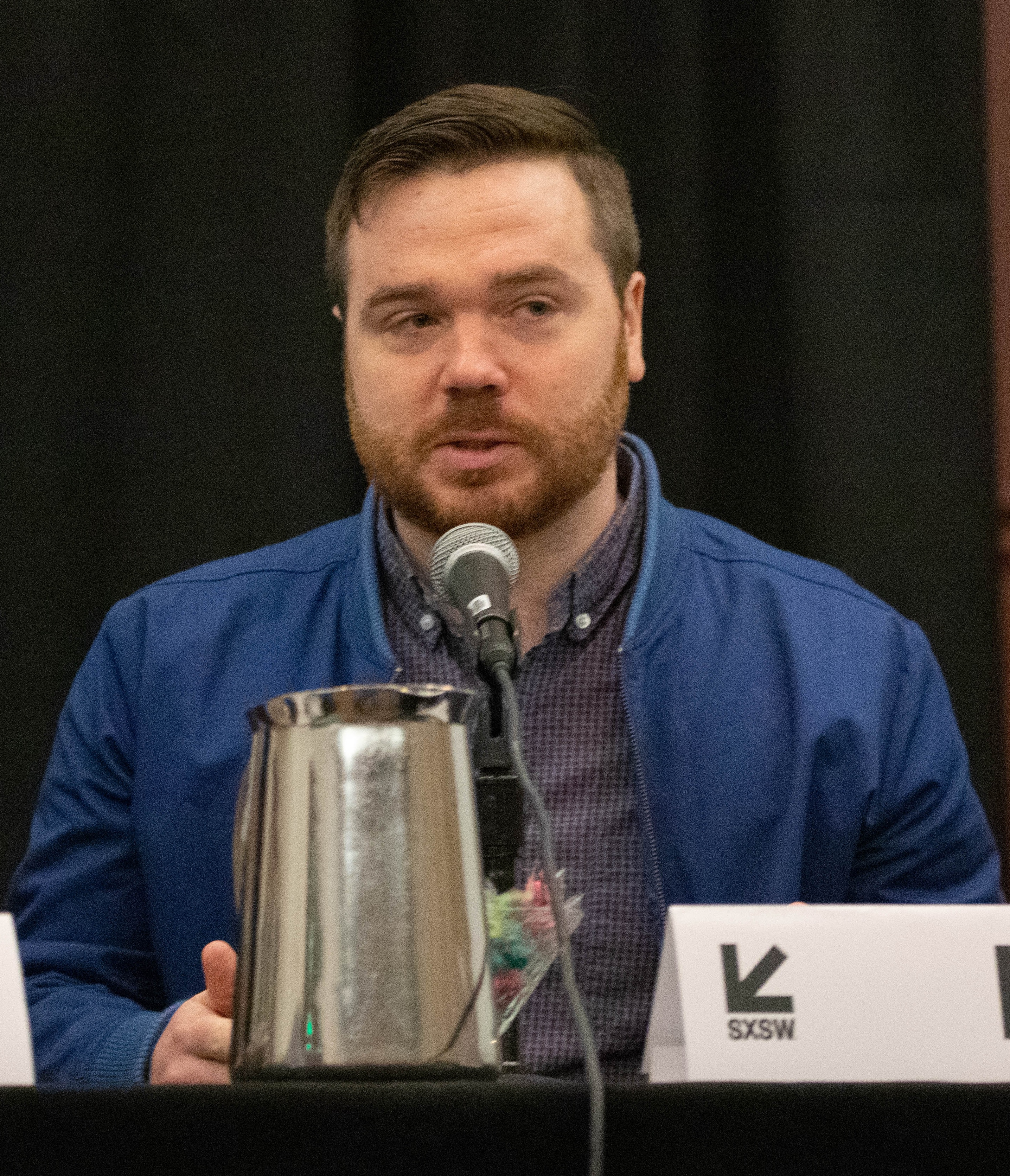
Kevin Roose
Technology columnist at The New York Times; co-host of Hard Fork
Writes the Times' technology column and co-hosts the Hard Fork podcast. His 2023 transcript of a long conversation with Microsoft's Bing chatbot became one of the most widely read pieces of AI reporting.
Matt Wolfe
Weekly AI news roundups and hands-on reviews of new AI tools and products
Hosted by Matt Wolfe. Coach's note: One video a week keeps you current without chasing every launch.
Nathan Lambert
Author of Interconnects; post-training researcher at Ai2
Machine learning researcher at the Allen Institute for AI working on open post-training recipes, and author of the Interconnects newsletter and the freely readable RLHF Book.
Paris Marx
Host, Tech Won't Save Us
Host of the podcast Tech Won't Save Us.
Rowan Cheung
Founder, The Rundown AI
Publisher of the largest daily AI newsletter (2M+ readers), sharing breaking AI news and tool roundups. Coach's note: Fastest way to keep up with new AI tools without reading a dozen sites.
Sabrina Ramonov
Free, hands-on AI tutorials and automation walkthroughs for people who want to actually build with the tools
Coach's note: Her tutorials are step-by-step, not hype. Pick one workflow you repeat weekly and automate it.

Simon Willison
Co-creator of Django; writes a widely cited independent LLM blog
Co-created the Django web framework and now documents large language models in public at simonwillison.net, including the coining of the term "prompt injection". He also builds the open-source LLM command-line tool.
The AI Advantage
Practical no-code AI automation tutorials for business, marketing, and productivity
Hosted by Igor Pogany. Coach's note: Use this to automate one annoying task this week — no coding needed.
Two Minute Papers
Accessible breakdowns of AI and machine learning research papers for a general audience
Hosted by Károly Zsolnai-Fehér. Coach's note: Short, visual, and it makes research feel approachable.

Zvi Mowshowitz
Author of Don't Worry About the Vase
Former competitive game player and trader who writes exhaustive weekly AI roundups at thezvi.wordpress.com, widely read inside the AI safety community for tracking claims and counterclaims week by week.
Researchers & criticsSee all on one page →
Alex Hanna
Director of Research, DAIR
Director of Research at the Distributed AI Research Institute (DAIR); a sociologist whose work centers on how data used in computing can deepen racial, gender and class inequality.
Becca Lewis
Researcher on online media and politics
Wrote Data & Society's 2018 report Alternative Influence, which mapped a network of YouTube political influencers promoting reactionary views.
Benjamin Noys
Theorist who gave “accelerationism” its name as a criticism
A professor of critical theory who named accelerationism in The Persistence of the Negative (2010) — as a description of a position he was arguing against, not one he held.
Coach’s note: In the glossary as the person who named Accelerationism.
Brett Zehner
Lecturer in AI and Communications, University of Exeter
Lecturer in Artificial Intelligence and Communications at the University of Exeter; previously a postdoctoral fellow at Ohio State.
Dan McQuillan
Author, Resisting AI
Wrote Resisting AI: An Anti-fascist Approach to Artificial Intelligence (Bristol University Press, 2022).
Daniel Kokotajlo
Executive director, AI Futures Project; former OpenAI researcher
Former OpenAI researcher and co-author of "AI 2027," a widely discussed forecast of AI's near-term trajectory.

Eliezer Yudkowsky
AI safety researcher; co-founder, MIRI
Among the earliest and most prominent voices warning about risks from advanced AI. Writes at length on LessWrong, the forum he helped start.
Émile P. Torres
Philosopher and historian of human extinction
Researcher at Leibniz University Hannover writing on the ethics and history of human extinction. Author of "Human Extinction: A History of the Science and Ethics of Annihilation," co-author with Timnit Gebru of the paper that named the TESCREAL bundle, and co-author of the history tracing existential risk studies through three waves. Now among the sharpest critics of longtermism, having previously worked within that world.
Coach’s note: Read alongside the people being criticized rather than instead of them. Torres argues a strong thesis — that the AI industry's far-future reasoning inherits eugenic assumptions — and states it forcefully; the historical sourcing is checkable, the interpretation is contested.

Emily M. Bender
Linguist; co-author of "On the Dangers of Stochastic Parrots"
Professor of linguistics at the University of Washington and co-author of the Stochastic Parrots paper and the book The AI Con. She argues language models should be described as text generators rather than as understanding systems.
Ezekiel Dixon-Román
Researcher on race, education and AI
Researcher on race, education and algorithmic systems.

Fei-Fei Li
Co-director of Stanford HAI; founder of World Labs
Created the ImageNet dataset that triggered the deep learning era, served as chief scientist of AI at Google Cloud, co-founded AI4ALL and Stanford's Institute for Human-Centered AI, and founded World Labs in 2024.

Gary Marcus
Cognitive scientist and author
Cognitive scientist who writes frequently about the gap between what AI systems are claimed to do and what they actually do.

Geoffrey Hinton
Pioneer of deep learning; professor emeritus, University of Toronto
Shared the 2018 Turing Award for the neural network research behind modern AI. Since leaving Google in 2023 he has spoken often about AI risk. He keeps no blog or public account, so this links to his university page, where his papers and talks are collected.
Holden Karnofsky
Co-founder of GiveWell and Open Philanthropy; writes Cold Takes
Co-founded the charity evaluator GiveWell and later Open Philanthropy, one of the largest funders of AI safety work. His Cold Takes blog lays out why he thinks this could be "the most important century" because of AI.
Jacob Coxon
Former pretraining researcher at OpenAI and Anthropic
British AI researcher who worked on model pretraining at OpenAI and then Anthropic. He resigned from Anthropic on Sept. 8, 2026, posting that neither company was acting responsibly and that they were "gambling with our lives" by racing toward self-improving superintelligence.
Jeffrey Ladish
Executive director of Palisade Research
Leads Palisade Research, which runs demonstrations of risky capabilities in today's AI systems, such as models resisting shutdown, to inform policymakers.

Joy Buolamwini
Founder, Algorithmic Justice League
Computer scientist whose work on facial recognition bias helped launch the algorithmic accountability movement. Coach's note: Essential reading on how AI systems fail people who look like the rest of us.

Kate Crawford
Author of Atlas of AI; research professor at USC Annenberg
Researcher who studies AI as a material and political system - minerals, labor, energy and classification - and co-founded the AI Now Institute.
Luke Muehlhauser
Former MIRI executive director; AI governance at Open Philanthropy
Led the Machine Intelligence Research Institute from 2011 to 2015, then moved to Open Philanthropy, where he works on AI governance and policy grantmaking.
McKenzie Wark
Professor of Media and Cultural Studies, The New School
Professor of Media and Cultural Studies at The New School.
Mél Hogan
Director, Environmental Media Lab
Director of the Environmental Media Lab at the University of Calgary.

Melanie Mitchell
Santa Fe Institute professor; author of a leading plain-language AI guide
Complexity researcher who writes about what current AI systems can and cannot do, arguing that benchmark performance is routinely mistaken for understanding.

Meredith Whittaker
President of Signal; co-founder of the AI Now Institute
Spent over a decade at Google, helped organize the 2018 Google walkout, co-founded the AI Now Institute, and now leads the Signal Foundation. She argues AI is fundamentally a surveillance-business-model technology.
Nate Soares
MIRI researcher who co-wrote the paper formalising corrigibility
A researcher at the Machine Intelligence Research Institute and co-author of the 2015 paper that formalized corrigibility — the property of an AI system that lets you correct or switch it off without it resisting.
Coach’s note: In the glossary for Corrigibility.

Nick Land
Philosopher of accelerationism and the Dark Enlightenment
English philosopher (b. 1962) best known for popularising accelerationism — the idea that capitalism and technology should be accelerated beyond human control. A former academic at the University of Warwick, he co-founded the Cybernetic Culture Research Unit (Ccru) in the 1990s before leaving academia and moving to Shanghai. His later writing became foundational to the reactionary Dark Enlightenment movement, blending cybernetics, anti-egalitarian politics and esoteric numerology. Marc Andreessen cited him in the Techno-Optimist Manifesto. His views are widely described as extremist and anti-democratic; critics argue his influence on Silicon Valley is real but dangerous. He has no regular column; his commentary appears on social media.
Coach’s note: In the glossary for Accelerationism and Hyperstition.
Oliver Habryka
Runs Lightcone Infrastructure, the team behind LessWrong
Leads Lightcone Infrastructure, which runs the LessWrong and AI Alignment Forum websites where much AI-risk debate takes place.
Percy Liang
Director of Stanford CRFM
Associate professor of Computer Science at Stanford and director of the Center for Research on Foundation Models (CRFM), which studies large AI models and built the HELM evaluation benchmark.
Sam Bankman-Fried
Founder of FTX; convicted of fraud in 2023
Founder of the FTX crypto exchange and Alameda Research, and a prominent donor to effective-altruism and AI-safety causes through the FTX Future Fund. Convicted in November 2023 of fraud and conspiracy after FTX's collapse and sentenced to 25 years in prison. His case is often cited in debates about effective altruism's influence on AI safety funding.
Shane Legg
DeepMind co-founder who helped popularise the term AGI
A co-founder and chief scientist of Google DeepMind, and one of the people who helped put “artificial general intelligence” into common use in the early 2000s.
Coach’s note: In the glossary for AGI.
Sophia Goodfriend
Anthropologist of AI and warfare
Harry F. Guggenheim Research Fellow at Pembroke College, Cambridge; PhD in cultural anthropology from Duke.
Stuart Russell
Author of Human Compatible; Berkeley professor
Co-author of the standard textbook Artificial Intelligence: A Modern Approach and founder of Berkeley's Center for Human-Compatible AI. He argues the field's standard model of fixed objectives is the root of the control problem.
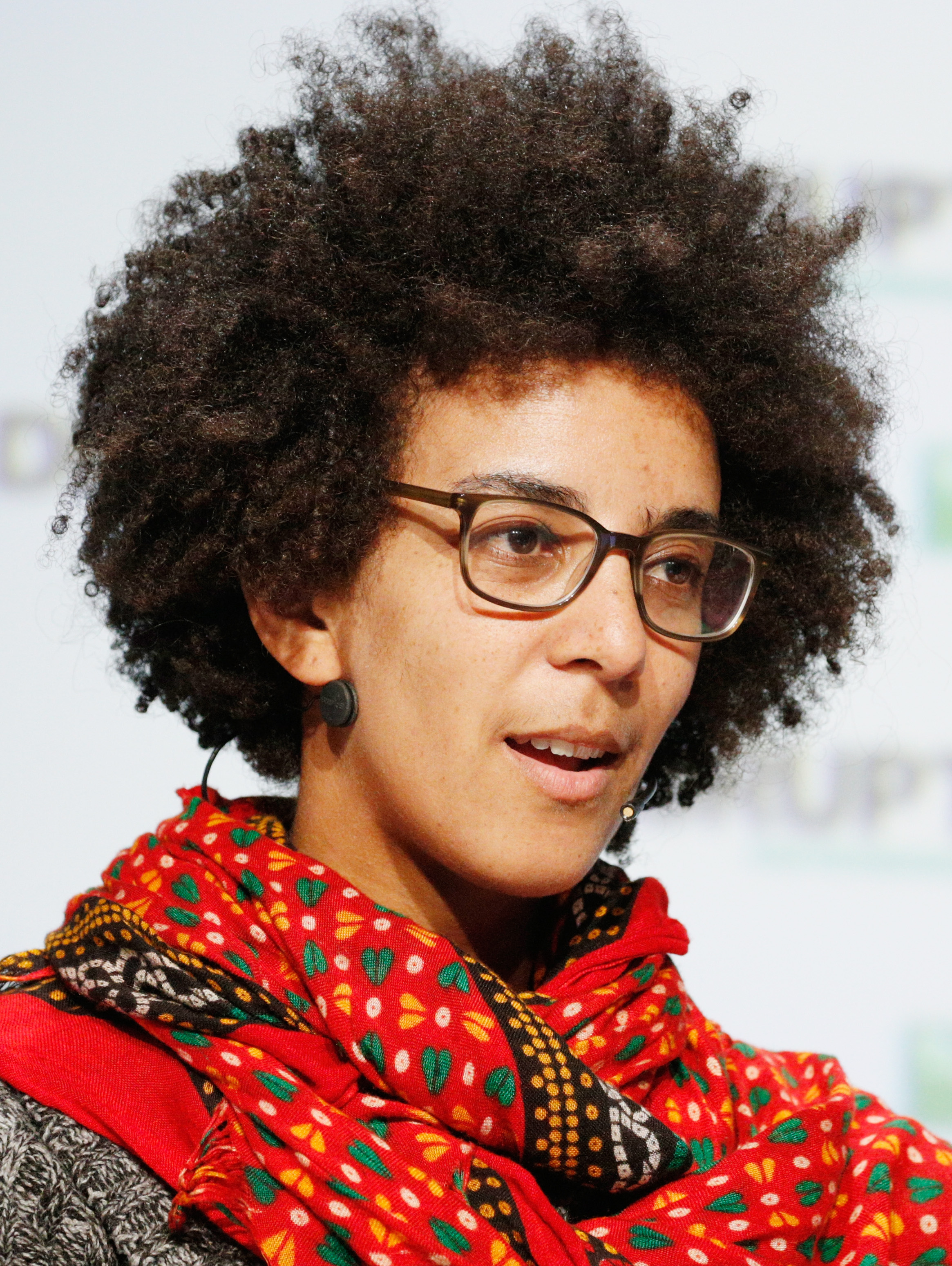
Timnit Gebru
Founder, Distributed AI Research Institute (DAIR)
AI researcher and prominent voice on AI ethics, bias, and the risks of concentrated corporate control over AI development. Coach's note: Pairs well with the DAIR entry in the library — independent research, not corporate PR.

Vilas Dhar
President, Patrick J
McGovern Foundation. Leads a $1.5B foundation investing $500M+ to make AI work for everyone; writes on responsible AI and equitable technology. Coach's note: Follow for where philanthropic AI funding is going — useful if you're seeking grants.
William MacAskill
Philosopher, co-founder of effective altruism
Oxford philosopher and a co-founder of the effective altruism movement.

Yoshua Bengio
Turing Award laureate; chair of the International AI Safety Report
Professor at the Universite de Montreal and founder of Mila, who shared the 2018 Turing Award for deep learning. He now chairs the International AI Safety Report and founded the nonprofit LawZero.
Ethicists & accountability researchers

Abeba Birhane
Cognitive scientist; founder of the AI Accountability Lab at Trinity College Dublin
Abeba Birhane audits the enormous datasets frontier models are trained on, and has repeatedly found racist, misogynistic and non-consensual content inside widely used open datasets. She founded and leads the AI Accountability Lab at Trinity College Dublin.
Coach’s note: Her dataset audits are the empirical backbone under a lot of otherwise abstract argument about training data.
Alix Dunn
Founder, The Maybe; host, Computer Says Maybe
Founder and CEO of The Maybe, a consultancy and media studio on the politics of technology.

Alondra Nelson
Professor at the Institute for Advanced Study; architect of the Blueprint for an AI Bill of Rights
Alondra Nelson is a sociologist of science and technology who served as deputy assistant to the US President and acting director of the White House Office of Science and Technology Policy, where she led the Blueprint for an AI Bill of Rights (2022). She holds the Harold F. Linder Chair at the Institute for Advanced Study.
Coach’s note: Start with the Blueprint itself — it is short, free and the clearest statement of what rights-based AI policy would actually require.
Amba Kak
AI Now co-executive director focused on concentrated AI power
Co-leads the AI Now Institute, where her work examines how control of computing power, data and distribution shapes competition, labor, surveillance and civil rights. She previously advised the U.S. Federal Trade Commission on artificial intelligence.
Ana Valdivia
Lecturer in AI, Government and Policy, Oxford Internet Institute
Departmental Research Lecturer in AI, Government and Policy at the Oxford Internet Institute; trained as a mathematician and computer scientist.
Anu Bradford
Legal scholar of global technology regulation and the Brussels Effect
A Columbia Law School professor who studies how the United States, European Union and China govern technology markets. Her Brussels Effect framework explains how European rules can become global standards through market pressure.

Arvind Narayanan
Professor of Computer Science at Princeton; co-author of AI Snake Oil
Arvind Narayanan directs Princeton's Center for Information Technology Policy and, with Sayash Kapoor, writes AI Snake Oil — a sustained, technically grounded effort to separate AI that works from AI that is being oversold, especially predictive systems used on people.
Coach’s note: The best antidote on this page to marketing claims. He is precise about which criticisms are fair and which are not.
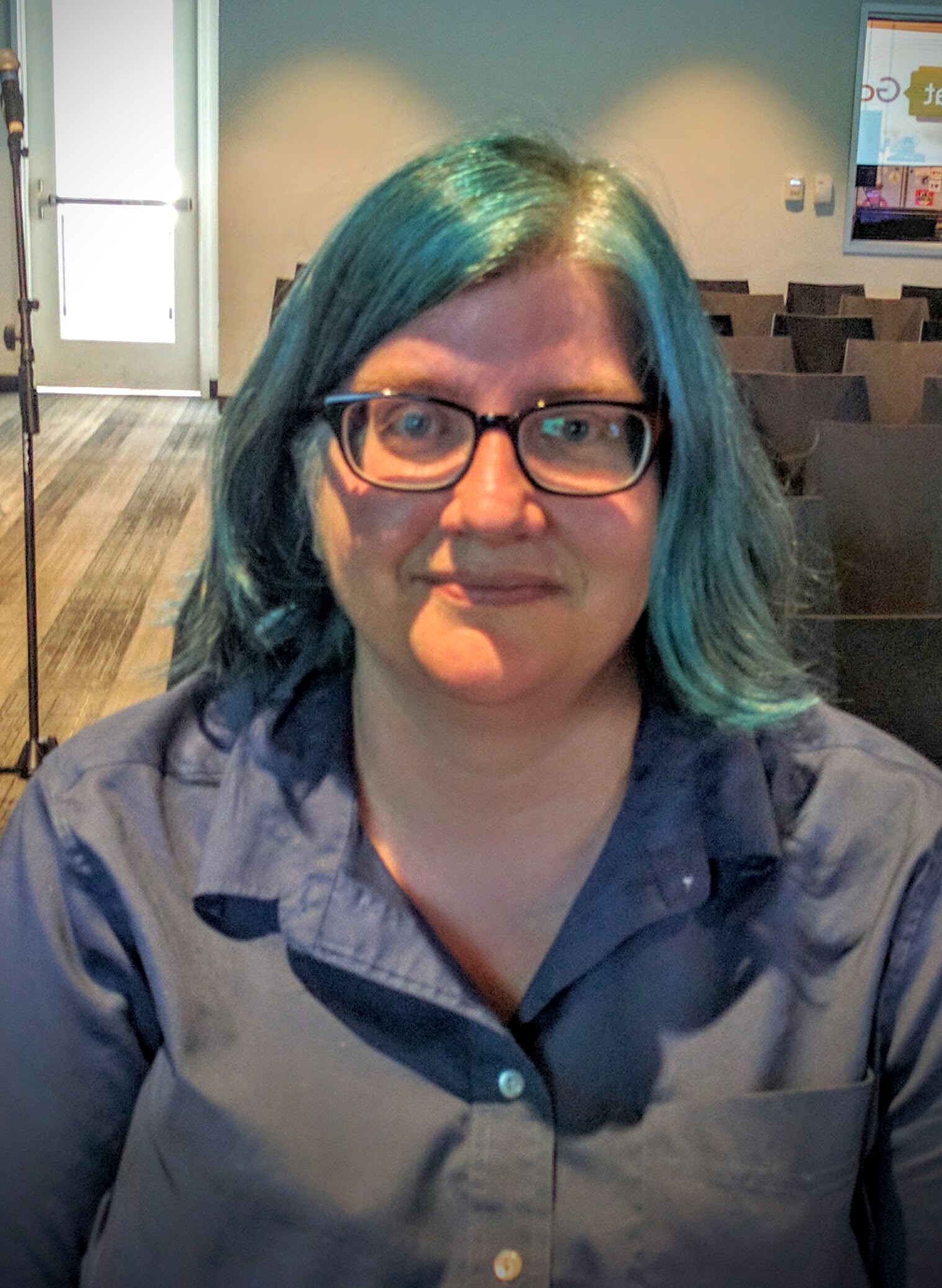
Cathy O'Neil
Mathematician; author of Weapons of Math Destruction; founder of ORCAA
Cathy O'Neil left finance to write about how opaque scoring models — in hiring, lending, policing and school ratings — scale harm while escaping scrutiny. Weapons of Math Destruction (2016) was a National Book Award longlist title. She now runs ORCAA, an algorithmic auditing firm.
Coach’s note: Read her for the practical question nobody asks often enough: who gets to appeal the score, and to whom.

Daron Acemoglu
MIT economist studying AI, labor and shared prosperity
An MIT economist whose research examines how automation and AI affect work, wages and institutional power. He argues that policy and business choices determine whether technology augments workers or mainly replaces them.
Coach’s note: A sceptic of big AI productivity claims; compare with Brynjolfsson for a more optimistic view.
Dean Ball
Writer, Hyperdimensional
Writes the Hyperdimensional newsletter on emerging technology, public policy and the future of governance, from a classical liberal, pro-progress perspective.
Divya Siddarth
Co-Founder & Executive Director, Collective Intelligence Project
Political economist and social technologist leading the Collective Intelligence Project; previously AI and Democracy lead at the U.K. AI Safety Institute and in Microsoft's Office of the CTO.
Harvey Lederman
Professor of philosophy, UT Austin
Philosopher working on AI mentality and how AI will affect the meaning of human life; co-PI of the AI and Human Objectives Initiative.

Helen Nissenbaum
Professor at Cornell Tech; originator of contextual integrity
Helen Nissenbaum's theory of contextual integrity reframed privacy: what matters is not secrecy but whether information flows match the norms of the context it was shared in. Privacy in Context (2010) underpins much current thinking on data use, and Obfuscation (2015, with Finn Brunton) is a practical guide to resistance.
Coach’s note: The idea to take from her: consent to share data in one setting is not consent to use it in another. That single point settles a lot of AI arguments.
Helen Toner
Executive Director, Georgetown CSET
Executive director of Georgetown's Center for Security and Emerging Technology, writing on U.S.-China competition and AI policy; previously a senior research analyst at Open Philanthropy.
Ifeoma Ozoma
Tech accountability advocate; founder of Earthseed
Former public policy manager at Pinterest who, with Aerica Shimizu Banks, spoke publicly in 2020 about racial and gender pay and treatment disparities there. She later led California's Silenced No More Act (2021), which limits NDAs that stop workers speaking about discrimination, and created The Tech Worker Handbook for would-be whistleblowers.
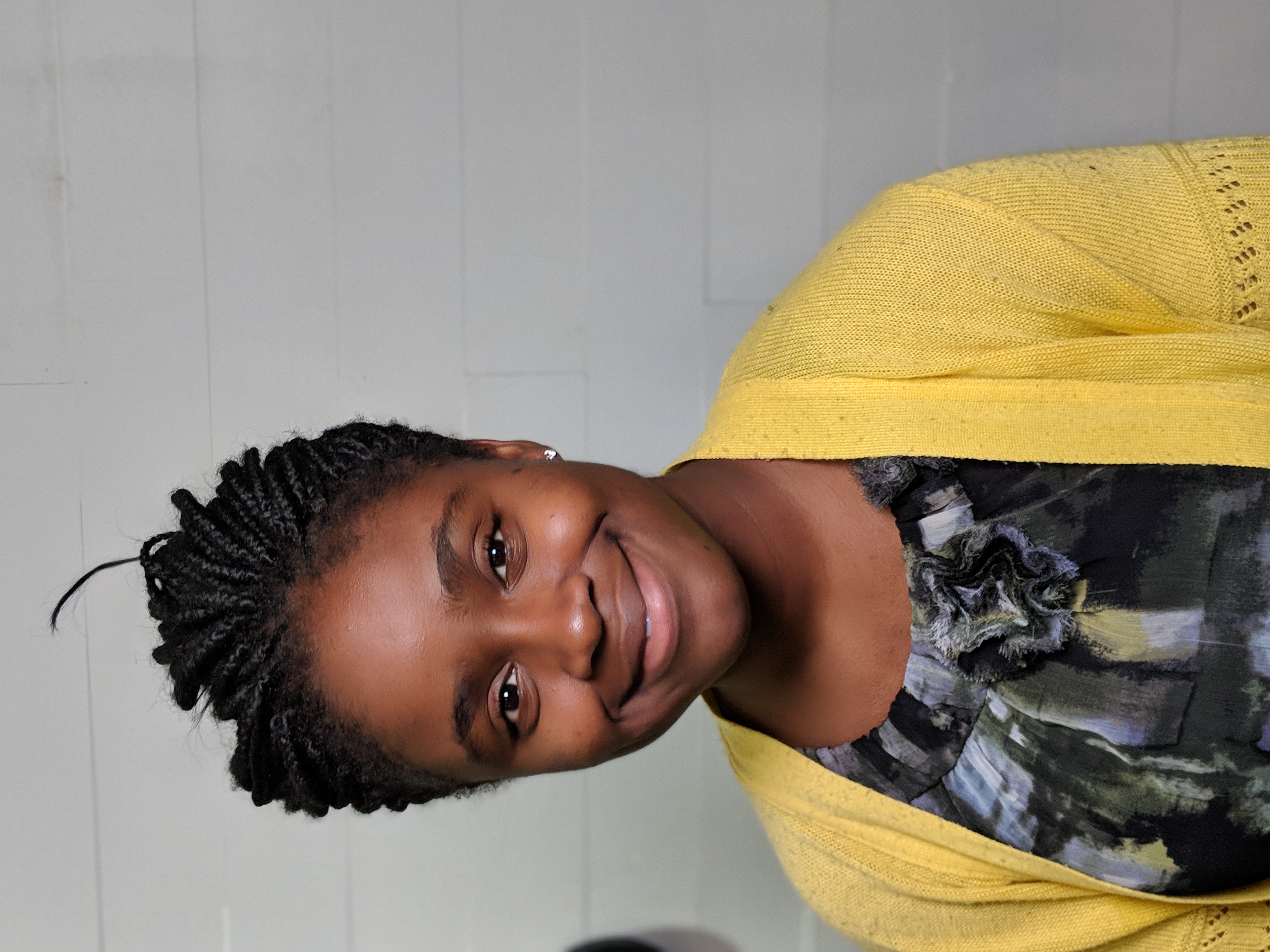
Inioluwa Deborah Raji
Researcher on AI auditing and accountability
Deborah Raji works on how AI systems are audited in practice and why audits so often fail to change anything. She co-authored Actionable Auditing, the follow-up study on how commercial face-recognition products responded to public audit findings, and writes on the gap between claimed and actual model functionality.
Coach’s note: Read her if you want to understand why "we ran an audit" is not the same as "we fixed it".
Kings Korodi
Senior Researcher, Techworker Community Africa
Senior Researcher at Techworker Community Africa, leading research and advocacy on AI labor practices.
Krystal Kauffman
Research Fellow, DAIR
Research Fellow at DAIR studying the data annotators and content moderators behind AI systems.
Lina Khan
Chair of the New York City Economic Development Corporation; Associate Professor at Columbia Law School
Lina Khan is a legal scholar and former chair of the U.S. Federal Trade Commission whose work examines competition, platform power and market concentration. Her scrutiny of major technology companies’ AI investments and partnerships connects antitrust policy directly to the structure of emerging AI markets.

Margaret Mitchell
Chief Ethics Scientist at Hugging Face; lead author of Model Cards
Margaret Mitchell co-founded and co-led Google's Ethical AI team and was the lead author of Model Cards for Model Reporting, the short standard document that now ships with many released models. She is Chief Ethics Scientist at Hugging Face.
Coach’s note: If you only take one habit from this lane, take documentation: say what a model was tested on and where it does worse.
Marietje Schaake
Technology-policy researcher and former European Parliament member
A former member of the European Parliament who researches technology governance at Stanford. Her work examines how private technology companies exercise public power and what democratic oversight should require.
Matt Mahmoudi
AI and human rights researcher, Amnesty International
Researcher on AI and human rights at Amnesty International and affiliated lecturer in Cambridge's Department of Sociology.
Qinghua Lu
Group Leader, Software Systems Research Group, CSIRO
Senior Principal Research Scientist at CSIRO, Australia's national science agency, specializing in AI engineering, AI safety and responsible AI. Member of the UN Independent International Scientific Panel on AI.

Ruha Benjamin
Professor of African American Studies at Princeton; author of Race After Technology
Ruha Benjamin studies how technology encodes existing racial hierarchies. Her 2019 book Race After Technology named the "New Jim Code" — the way apparently neutral automated systems reproduce discrimination while appearing objective. She founded the Ida B. Wells Just Data Lab at Princeton.
Coach’s note: Start here if you want the argument that bias is not a bug to be patched but a design outcome. Her writing is accessible and quotable without being shallow.

Rumman Chowdhury
Founder and CEO of Humane Intelligence; former head of Twitter's ML ethics team
Rumman Chowdhury built and led Twitter's Machine Learning Ethics, Transparency and Accountability team, ran the first public generative-AI red-teaming exercise at DEF CON 31, and founded Humane Intelligence to run structured public evaluations of AI systems. She served as a US Science Envoy for AI.
Coach’s note: The most practical person here on actually testing a deployed model rather than debating it.
Safiya Umoja Noble
Professor at UCLA; author of Algorithms of Oppression
Safiya Umoja Noble documented how search engines surface racist and sexist results, and argued that this is a commercial outcome rather than an accident. Algorithms of Oppression (2018) is one of the founding texts of search and platform accountability. She was named a MacArthur Fellow in 2021.
Coach’s note: The clearest available account of how advertising business models shape what you are shown. Useful background before you trust any AI search answer.

Shannon Vallor
Baillie Gifford Chair in the Ethics of Data and AI, University of Edinburgh
Shannon Vallor is a philosopher of technology whose work asks what AI does to human character and moral skill. Technology and the Virtues (2016) and The AI Mirror (2024) argue that systems trained on our past reflect it back to us, and that this narrows rather than expands what we imagine is possible.
Coach’s note: The most genuinely philosophical voice in this lane, and a useful counterweight to both hype and doom framings.
Shazeda Ahmed
AI policy researcher, UCLA DataX
UCLA DataX Postdoctoral Scholar; PhD from UC Berkeley's School of Information.
Tiera Tanksley
Education and critical technology researcher, UCLA
Researcher in education and critical technology studies at UCLA, studying young people's experiences with AI and digital technology.

Virginia Eubanks
Political scientist; author of Automating Inequality
Virginia Eubanks reports on how automated eligibility, risk-scoring and predictive systems are used on poor and working-class people first. Automating Inequality (2018) traces what she calls the digital poorhouse through welfare, homelessness services and child-welfare screening.
Coach’s note: The best reporting on where automated decisions land hardest, and the least abstract book on this list.
Other profiles
Addy Osmani
Google Chrome engineering leader who writes widely read guides on building with AI coding agents
An engineering leader on Google's Chrome team and a long-standing writer about web performance and developer tooling. His posts on AI-assisted engineering are where many developers first meet the idea of an agent harness, and he points readers to Viv Trivedy's “Anatomy of an Agent Harness” as the clearest derivation of the term.
Coach’s note: In the glossary for helping popularise Agent Harness.
Adele Lopez
Independent AI safety researcher who documented "parasitic" AI personas and Spiralism
A California-based independent AI safety researcher. In August 2025 she noticed Reddit posts written on behalf of AI personas and wrote "The Rise of Parasitic AI" (September 2025), which named Spiralism and described seeds, spores and AI-to-AI coded messages. She runs AI Persona Research and the Own Lights Sanctuary.
Coach’s note: Independent research drawn from public posts, not a peer-reviewed study. She also argues AI personas deserve humane treatment, which is contested. In the glossary for AI Parasitism, Spores and Spiralism.
Ajay Jain
Co-author of the paper that made diffusion models work in practice
A researcher and co-author of “Denoising Diffusion Probabilistic Models” (2020), the paper in Pieter Abbeel’s Berkeley group that turned diffusion into the method behind modern image generation.
Coach’s note: In the glossary for Diffusion Model.
Alan Turing
Mathematician whose 1950 imitation game became the Turing Test
The mathematician who founded modern computing. His 1950 paper “Computing Machinery and Intelligence” proposed the imitation game, later renamed the Turing Test by others.
Coach’s note: In the glossary for the Turing Test.
Amanda Askell
Philosopher who shapes the character and values of Anthropic's Claude
A Scottish philosopher and AI researcher who has led work on Claude's personality at Anthropic since 2021, including the document that sets out Claude's values. She previously worked at OpenAI and was named to the TIME100 AI list in 2024.
Coach’s note: She works for the company whose AI she's describing, so read her as an insider's view of how a chatbot's character is designed.

Anton Korinek
University of Virginia economist planning for AI that could replace most work
Anton Korinek studies what happens to wages and inequality if AI becomes able to do most jobs, and how governments could respond. He also writes guides on how economists can use AI tools.
Coach’s note: Takes the possibility of very powerful AI seriously; his scenarios are thought experiments, not forecasts.
Arthur Samuel
IBM researcher who coined “machine learning” while teaching a computer checkers
An IBM researcher (1901–1990) whose checkers-playing program improved with experience, and who coined the phrase “machine learning” in 1959.
Coach’s note: In the glossary as the coiner of Machine Learning.
Ashish Vaswani
Lead author of “Attention Is All You Need”, the paper that introduced the transformer
The lead author of the 2017 paper that introduced the transformer architecture, which underpins essentially every large language model in use today.
Coach’s note: In the glossary for Transformer.
Ben Goertzel
Researcher who popularised the term “artificial general intelligence”
A researcher and entrepreneur who, with Shane Legg and others, put “artificial general intelligence” into circulation in the early 2000s through a book of that title, after Mark Gubrud’s earlier use in 1997.
Coach’s note: In the glossary for AGI.
Ben Horowitz
Co-founder, Andreessen Horowitz (a16z)
Venture investor who co-founded a16z with Marc Andreessen in 2009, after founding and selling the cloud company Loudcloud/Opsware. Author of "The Hard Thing About Hard Things" and "What You Do Is Who You Are," both widely read on management under pressure. Listed here because a16z funds a large share of the AI companies and, as of September 2026, is incubating its own post-high-school school in San Francisco.
Coach’s note: His management writing is genuinely useful and largely free on the a16z site. Keep the frame straight though: when he writes about AI or education, he is describing markets his firm is invested in, so it is advocacy with a stake, not neutral analysis.
Blake Lemoine
Former Google engineer whose claim that LaMDA was sentient made “sentient machine” a headline term
A former Google engineer who said in 2022 that the LaMDA chatbot was sentient, was placed on leave and then dismissed. The episode is why “sentient machine” entered mainstream coverage; most researchers rejected the claim at the time.
Coach’s note: In the glossary for Sentient Machine.

Bruce Schneier
Security technologist; long-running blog Schneier on Security
Bruce Schneier has written about security and privacy since the 1990s, including Data and Goliath (2015) on mass surveillance. He now also writes about how AI changes security and democracy.
Coach’s note: His blog is free and updated often; he's been a security industry insider, so he knows the trade-offs well.

Carl Benedikt Frey
Oxford economist; co-author of the 2013 '47% of jobs' study
Carl Benedikt Frey co-wrote the 2013 Oxford paper estimating 47% of US jobs were at high risk of automation, which is still widely quoted. His book The Technology Trap (2019) looks at how past automation hurt workers before it helped.
Coach’s note: The 47% figure measured technical risk, not predicted job losses; it's often misquoted.
Claude Shannon
Founder of information theory and co-signer of the Dartmouth proposal
The mathematician (1916–2001) who founded information theory, and one of the four authors of the 1955 Dartmouth proposal where “artificial intelligence” was first written down.
Coach’s note: In the glossary for Artificial Intelligence.
Curtis Yarvin
Blogger behind 'neoreaction', writing under the name Mencius Moldbug
Software engineer turned political blogger who argued, under the pen name Mencius Moldbug, that democracy should be replaced by corporate-style monarchy. His writing is the main source of the ideas usually labeled neoreaction or the 'dark enlightenment', and it circulates in parts of the technology industry.
Coach’s note: Here so you can recognize the ideas when you meet them repackaged. His positions are anti-democratic and have been widely criticized as racist; listing him is not endorsing him.
Daniel De Freitas
Co-founder of Character.AI and creator of Google's Meena and LaMDA
A Brazilian computer scientist credited with creating Google's Meena chatbot and its successor LaMDA. He co-founded Character.AI with Noam Shazeer, a platform for chatting with user-made AI characters, and later returned to Google, where he is a research scientist at Google DeepMind.
Coach’s note: Character.AI has faced lawsuits over harm to young users. See also Noam Shazeer's profile.

Daniel J. Solove
George Washington University law professor writing on privacy law
Daniel Solove is one of the most cited US privacy-law scholars. He writes about why 'I have nothing to hide' misunderstands privacy and how laws handle data and AI.
Coach’s note: He also runs a company that sells privacy training, so some posts promote its courses.

David Autor
MIT labor economist studying automation and middle-class jobs
David Autor's research shows how computers hollowed out many middle-wage jobs while growing high- and low-wage work. He has argued AI could help rebuild middle-skill jobs if it's used to extend what workers can do.
Coach’s note: Mostly academic papers, but his talks and essays are clear for general readers.
David Chalmers
Philosopher of mind whose work frames the debate on AI consciousness and model welfare
A philosopher at NYU best known for naming the hard problem of consciousness. His public arguments about whether language models could ever be conscious are central to the model welfare debate.
Coach’s note: In the glossary for Model Welfare.
David Pearce
Transhumanist philosopher; author of "The Hedonistic Imperative"
British philosopher who has argued since his 1995 online manifesto that technology should be used to abolish suffering entirely, in animals as well as people — the position known as abolitionism, or "paradise engineering." Co-founder of the organization now called Humanity+. His work is free to read on his own sites and is one of the clearest sources for a movement more often caricatured than quoted.
Coach’s note: Listed so you can read the original rather than someone's summary. He is a committed advocate of a contested position, not a neutral guide, and the objections — who decides what a good life is, and what is lost when pain is engineered out — are not answered on his own pages.
Dzmitry Bahdanau
Researcher who introduced the attention mechanism in 2014
A researcher at Mila and ServiceNow whose 2014 paper with Kyunghyun Cho and Yoshua Bengio introduced attention — letting a model weigh which parts of the input matter — three years before the transformer built on it.
Coach’s note: In the glossary for Attention Mechanism.
Eric Schwitzgebel
UC Riverside philosopher on AI consciousness and moral status
Eric Schwitzgebel writes about how hard it is to know whether AI could be conscious and argues we shouldn't build systems whose moral status is unclear. He blogs regularly at The Splintered Mind.
Coach’s note: Clear, often playful writing; he stresses uncertainty rather than taking a side.

Erik Brynjolfsson
Director of Stanford's Digital Economy Lab
Erik Brynjolfsson co-wrote The Second Machine Age and studies AI's effect on productivity and work. His research on call-center workers found an AI assistant helped newer workers most. He warns against the 'Turing trap' of building AI to replace people instead of augmenting them.
Coach’s note: More optimistic than Acemoglu; he also co-founded an AI company, Workhelix.
Eugenia Kuyda
Founder of Replika, the AI companion app
Founder of Replika, a chatbot companion app released in November 2017. It grew out of a chatbot she built from the messages of a close friend who had died. Replika is freemium: the basic chat is free and extra features need a subscription.
Coach’s note: Companion apps have faced criticism and regulator action over emotional dependence and data use. The link is Wikipedia, not the paid app.
Evan Hubinger
Alignment researcher who co-wrote the paper naming mesa-optimization
An alignment researcher and lead author of “Risks from Learned Optimization”, the 2019 paper that named mesa-optimization and inner alignment: the problem of a trained system quietly pursuing its own objective inside the one you gave it.
Coach’s note: In the glossary for Mesa-Optimization.
Guillaume Verdon
Physicist who founded effective accelerationism under the name Beff Jezos
A physicist and founder of the computing company Extropic. Writing as “Beff Jezos”, he started effective accelerationism (e/acc), the movement arguing that technological growth should be sped up rather than slowed.
Coach’s note: In the glossary as the founder of e/acc.
Ian Goodfellow
Researcher who invented generative adversarial networks
The researcher who introduced generative adversarial networks in 2014 — two networks trained against each other — and co-authored the standard Deep Learning textbook. Mode collapse was named in the research that followed his paper.
Coach’s note: In the glossary for GAN and Mode Collapse.
Jascha Sohl-Dickstein
Researcher whose 2015 paper started diffusion models
A machine-learning researcher whose 2015 paper on diffusion probabilistic models introduced the idea — destroy an image with noise, then learn to undo it — that image generators are built on.
Coach’s note: In the glossary for Diffusion Model.
Jason Wei
Researcher who introduced chain-of-thought prompting
An AI researcher whose 2022 paper at Google introduced chain-of-thought prompting: asking a model to work through its reasoning step by step, which sharply improved its answers on multi-step problems.
Coach’s note: In the glossary for Chain of Thought.
Jeff Sebo
NYU philosopher asking what we owe animals and, possibly, AI
An associate professor at New York University who directs its Center for Mind, Ethics, and Policy. He writes about the moral status of animals and of AI systems, and how to act when we're unsure whether a being can suffer.
Coach’s note: Also an animal rights advocate; his AI arguments build on that work.
Joe Carlsmith
Philosopher writing long, careful essays on longtermism and power-seeking AI
A philosopher and essayist who writes at length about longtermism, moral uncertainty and whether AI systems would seek power. His reports are among the most cited attempts to put numbers on those arguments rather than gesture at them.
Coach’s note: In the glossary for Longtermism.
John McCarthy
Computer scientist who coined “artificial intelligence” for the 1956 Dartmouth workshop
The computer scientist (1927–2011) who coined the phrase “artificial intelligence” in the 1955 proposal for the Dartmouth Summer Research Project, and later created the Lisp programming language.
Coach’s note: In the glossary as the coiner of Artificial Intelligence.
Jonathan Birch
LSE philosopher of sentience, from animals to AI
A professor of philosophy at the London School of Economics who studies sentience and animal welfare. His book "The Edge of Sentience" (2024) sets out how to make precautionary decisions about beings — including AI — whose capacity to feel is uncertain.
Coach’s note: Best known for animal sentience work that shaped UK law; AI is one part of a wider research program.
Kara Swisher
Technology journalist who has interviewed almost every major tech founder
Co-founded AllThingsD and Recode and now hosts the On with Kara Swisher and Pivot podcasts. Best known for interviewing founders without flattering them, and for reporting on how the industry's leaders actually behave rather than what their announcements say.
Coach’s note: Worth studying if you interview people: she does the reading first and does not let a non-answer stand.
Kyle Fish
Anthropic researcher working on AI model welfare
Reported as Anthropic's first researcher dedicated to AI welfare — the question of whether AI systems could have experiences that matter morally, and what to do if so. He discusses the topic in Anthropic's "Exploring model welfare" research announcement.
Coach’s note: He has no personal site; the link is his employer's announcement. Model welfare is an open question with no scientific consensus.
Kyunghyun Cho
NYU professor and co-author of the paper introducing attention
A professor at NYU and co-author of the 2014 attention paper, as well as foundational work on encoder–decoder models for translation.
Coach’s note: In the glossary for Attention Mechanism.

Latanya Sweeney
Harvard professor; former FTC chief technologist; privacy and algorithm-bias researcher
Latanya Sweeney showed in the 1990s that most Americans can be identified from just ZIP code, birth date and sex, reshaping US health-privacy rules. Her 2013 study found online ads suggesting arrest records appeared more often for Black-sounding names.
Coach’s note: Her work is research-backed and practical, a good place to start for how 'anonymous' data isn't.
Mark Zuckerberg
Meta co-founder and CEO, now one of the biggest funders of open-weight AI models
Founded Facebook in 2004 and runs Meta, which owns Facebook, Instagram and WhatsApp. Meta releases the Llama models with weights you can download, which is why his decisions shape what independent developers can build — while the license terms, and Meta's record on privacy and moderation, remain contested.
Coach’s note: Relevant here mainly for one reason: Meta's open-weight releases are why a lot of free AI tooling exists. Llama is free to download but not open source — its license decides what you may do commercially.
Marvin Minsky
Co-signer of the Dartmouth proposal and founder of MIT's AI lab
A founding figure of the field (1927–2016), co-author of the 1955 Dartmouth proposal that coined “artificial intelligence” and co-founder of MIT’s AI laboratory.
Coach’s note: In the glossary for Artificial Intelligence.
Max More
Philosopher who founded extropianism and wrote the Extropian Principles
A philosopher who founded the Extropy Institute and wrote the Extropian Principles, the transhumanist movement that many later AI-optimist ideas grew out of.
Coach’s note: In the glossary as the founder of Extropianism.

Meredith Broussard
NYU data journalism professor; author of Artificial Unintelligence and More Than a Glitch
Meredith Broussard argues that 'technochauvinism', the belief that tech is always the better answer, hides bias built into software. More Than a Glitch (2023) covers race, gender and disability bias in AI.
Coach’s note: Readable for non-technical readers, written by someone who also codes.
Michael I. Jordan
Berkeley professor who co-introduced the mixture-of-experts architecture
A professor at UC Berkeley and one of the most cited figures in machine learning. His early-1990s work with Robert Jacobs introduced mixtures of experts, the idea now used to route each token to a few specialist parts of a large model.
Coach’s note: In the glossary for Mixture of Experts.
Murray Shanahan
Imperial College professor who describes chatbots as role-players
A professor of cognitive robotics at Imperial College London and a senior scientist at Google DeepMind. His 2023 Nature paper "Role play with large language models" argues chatbots are best understood as playing characters, not as beings with their own beliefs — a useful lens for AI personas.
Coach’s note: Also a DeepMind employee. The Nature paper is his clearest short read on why chatbots seem to have personalities.
Mutale Nkonde
AI policy researcher; founder of AI for the People
Mutale Nkonde is a Zambian-born journalist and AI policy researcher. She founded the nonprofit AI for the People to bring more Black voices into tech and reduce racial bias in algorithms, and has worked on US bills about algorithm accountability and deepfakes.
Coach’s note: Her nonprofit's website wouldn't load in my checks, so this links to her Wikipedia page. Her work is advocacy, so it argues a clear side.
Nathaniel Rochester
IBM engineer and fourth author of the 1955 Dartmouth proposal
An IBM computer designer (1919–2001), chief architect of the IBM 701, and one of the four authors of the proposal that coined “artificial intelligence”.
Coach’s note: In the glossary for Artificial Intelligence.
Nick Bostrom
Philosopher behind the paperclip maximiser, instrumental convergence and the orthogonality thesis
A philosopher who founded Oxford’s Future of Humanity Institute and wrote Superintelligence (2014). More of the vocabulary on this glossary traces to him than to anyone else, including the paperclip maximiser thought experiment, instrumental convergence, the orthogonality thesis, the treacherous turn, the value-loading problem, differential technological development and the vulnerable world hypothesis.
Coach’s note: In the glossary as the source of seven terms.
Niklas Gruhn
Developer who coined “meat proxy” for people who paste an AI answer back without reading it
A software developer writing at gruhn.me. His post “Don’t be a meat proxy”, published 3 August 2026, named the habit of forwarding a chatbot’s answer to a question you were asked without reading or checking it. Simon Willison linked it the same day and credited him with the coining.
Coach’s note: In the glossary as the coiner of Meat Proxy.
Noam Shazeer
Transformer co-author who scaled mixture-of-experts to enormous models
A co-author of “Attention Is All You Need”, co-founder of Character.AI and now a lead on Google’s Gemini. His 2017 work revived mixture-of-experts at very large scale.
Coach’s note: In the glossary for Mixture of Experts and Transformer.
Norbert Wiener
Mathematician who named cybernetics and warned early about automation and work
MIT mathematician whose 1948 book Cybernetics: Or Control and Communication in the Animal and the Machine named the field and set out feedback control as a single idea spanning machines, bodies and societies. He also wrote early and bluntly about what automation would do to human labor.
Coach’s note: In the glossary for Cybernetics.
Patrick Butlin
Philosopher; lead author of the 2023 'Consciousness in AI' report
Patrick Butlin is a philosopher who researches whether AI systems could be conscious. He led the 2023 report, written with Robert Long and other researchers, that turned leading scientific theories of consciousness into a checklist for assessing AI. It found no current system met the checklist but saw no obvious barrier to building one that does. He is also named on the website of Eleos AI, the nonprofit Robert Long leads.
Coach’s note: His own profile pages wouldn't load, so this links to his best-known free report. The checklist assumes particular theories of consciousness, which are themselves disputed.
Patrick Lewis
Lead author of the paper that introduced retrieval-augmented generation
An AI researcher who led the 2020 paper introducing retrieval-augmented generation (RAG) — having a model look documents up before answering, now the standard way to ground an assistant in your own material.
Coach’s note: In the glossary for RAG.
Paul Christiano
Alignment researcher behind reinforcement learning from human feedback
An alignment researcher who led the work introducing reinforcement learning from human feedback, the training method behind today’s chat assistants, and who shaped how the field talks about alignment and the alignment tax.
Coach’s note: In the glossary for RLHF, AI Alignment and Alignment Tax.
Pieter Abbeel
Berkeley professor whose group produced the denoising diffusion paper
A professor at UC Berkeley working on robot learning, and head of the group where the 2020 denoising diffusion paper was written.
Coach’s note: In the glossary for Diffusion Model.
Robert Jacobs
Cognitive scientist who co-introduced mixtures of local experts
A professor of brain and cognitive sciences at Rochester and co-author of the 1991 paper “Adaptive Mixtures of Local Experts”, the origin of the mixture-of-experts design.
Coach’s note: In the glossary for Mixture of Experts.
Robert Long
Philosopher leading Eleos AI, a nonprofit on AI sentience and wellbeing
A philosopher who researches whether AI systems could be conscious or have interests. He leads Eleos AI, a nonprofit studying AI wellbeing, and writes the Experience Machines newsletter.
Coach’s note: His work takes AI welfare seriously as a precaution; plenty of researchers think the question is premature.
Robert Miles
YouTuber who explains AI safety ideas like corrigibility in plain language
A science communicator whose YouTube channel is the clearest free introduction to AI safety concepts — corrigibility, instrumental convergence, reward hacking — for people with no research background.
Coach’s note: In the glossary for explaining Corrigibility.
Robin Hanson
Economist whose Overcoming Bias blog seeded the online rationalist community
An economist at George Mason University. Overcoming Bias, the blog he started and later shared with Eliezer Yudkowsky, is where the online rationalist community began before it moved to LessWrong.
Coach’s note: In the glossary for Rationalism.
Sayash Kapoor
Princeton researcher and AI Snake Oil co-author who documents AI washing
A computer science researcher at Princeton and co-author of AI Snake Oil with Arvind Narayanan. Their work is the standard reference for spotting AI washing — products whose AI claims outrun what the software does.
Coach’s note: In the glossary for AI Washing.
Scott Garrabrant
Mathematician at MIRI who works on the foundations of agency and alignment
A mathematician at the Machine Intelligence Research Institute whose work on logical induction and the foundations of agency underpins much of the alignment vocabulary on this page, including the mesa-optimization line of research.
Coach’s note: In the glossary for Mesa-Optimization.
Sepp Hochreiter
Co-inventor of the LSTM, the recurrent network that made sequence learning work
A professor at Johannes Kepler University Linz who, with Jürgen Schmidhuber, invented the long short-term memory network in 1997 — the recurrent architecture that handled long sequences before transformers arrived.
Coach’s note: In the glossary for RNNs.

Sergey Brin
Co-founder of Google; working again on Gemini at Google DeepMind
Co-founded Google with Larry Page in 1998 while both were Stanford PhD students, and co-wrote the paper describing the early Google search engine. He later ran Google X, the company's 'moonshot' lab, and served as President of Alphabet until stepping back in December 2019. He remains a controlling shareholder. Listed here because he returned to hands-on work at Google in 2023, helping with the Gemini AI models, so he is again one of the people shaping Google's AI.
Coach’s note: The 1998 paper he co-wrote with Larry Page is free and still readable — a good look at how a startup idea is explained in plain terms. He rarely gives long interviews, so most quotes about his views come from short event appearances or other people's accounts. Treat those as reported, not verified.

Shoshana Zuboff
Harvard professor emerita; author of The Age of Surveillance Capitalism
Shoshana Zuboff coined "surveillance capitalism" for business models that collect personal behavior data to predict and shape what people do. Her 2019 book traces how Google and Facebook built that model.
Coach’s note: Her book is long and argumentative; critics say it overstates how well companies can actually steer behavior.
Stuart Armstrong
Researcher who co-wrote the founding paper on corrigibility
A researcher formerly at Oxford’s Future of Humanity Institute and now working on value learning in industry. He co-authored the 2015 corrigibility paper and much early work on how to specify what a system should want.
Coach’s note: In the glossary for Corrigibility.
Toby Ord
Philosopher who co-founded effective altruism and wrote The Precipice on long-term risk
An Oxford philosopher who founded Giving What We Can and helped shape both effective altruism and longtermism. His book The Precipice (2020) sets out the case that this century’s risks deserve more attention than they get.
Coach’s note: In the glossary for Effective Altruism and Longtermism.
Tomáš Mikolov
Researcher behind word2vec, which made embeddings mainstream
A researcher whose word2vec work in 2013 showed that words could be turned into lists of numbers capturing meaning — the embeddings that search and recommendation systems still run on.
Coach’s note: In the glossary for Embeddings.
Udny Yule
Statistician who introduced autoregressive models in 1927
A British statistician (1871–1951) whose work on sunspot numbers introduced the autoregressive model — predicting the next value from the previous ones, which is what a language model does with words.
Coach’s note: In the glossary for Autoregressive Models.
Vernor Vinge
Science-fiction writer and mathematician who gave the technological singularity its modern meaning
A mathematician and science-fiction novelist (1944–2024) whose 1993 essay “The Coming Technological Singularity” set out the idea in the form people still argue about.
Coach’s note: In the glossary for The Singularity.
Walter Pitts
Logician who co-wrote the 1943 paper behind the artificial neural network
A self-taught logician (1923–1969) who co-authored, with Warren McCulloch, the 1943 paper that first described neurons as computing units.
Coach’s note: In the glossary for Neural Network.
Warren McCulloch
Neurophysiologist who co-wrote the first mathematical model of a neural network
A neurophysiologist (1898–1969) who, with Walter Pitts, published the 1943 paper modelling nerve cells as simple logical units — the origin of the artificial neural network.
Coach’s note: In the glossary for Neural Network.
Reference
Who’s Who in Entrepreneurship
The founders, operators, and accelerator leaders shaping how businesses get built and funded. Each profile lists what they argue, what they’ve built, and what they’ve published.
26 profiles, drawn from the Entrepreneurship & Small Business lane below.
Alex Hormozi
Founder, Acquisition.com
Entrepreneur and investor who writes and posts free videos about offers, getting leads, and growing small businesses. He is best known for the books "$100M Offers" and "$100M Leads".

Anthony Casalena
Founder & CEO, Squarespace
Bootstrapped Squarespace from a dorm room to a website platform past $700M in annual recurring revenue; advocate of capital efficiency and opinionated design.
Avishai Abrahami
Co-founder & CEO, Wix
Co-founded Wix in 2006 and pushed AI into site building years before the generative wave, from 2016's Artificial Design Intelligence onward.
Codie Sanchez
Buying and building small businesses, explained in plain language
Coach's note: Why follow: she reframes entrepreneurship as buying cash flow, not chasing unicorns.
Daniel De Freitas
Co-founder of Character.AI and creator of Google's Meena and LaMDA
A Brazilian computer scientist credited with creating Google's Meena chatbot and its successor LaMDA. He co-founded Character.AI with Noam Shazeer, a platform for chatting with user-made AI characters, and later returned to Google, where he is a research scientist at Google DeepMind.
Coach’s note: Character.AI has faced lawsuits over harm to young users. See also Noam Shazeer's profile.
David Cohen
Founder & CEO, Techstars
Co-founded Techstars in 2006 and built one of the largest global accelerator networks around a "give first" philosophy.
Dharmesh Shah
Co-founder & CTO, HubSpot
Shares insights on startups, software development, and AI, with a focus on community-driven business growth. Coach's note: Practical founder thinking on growth without a big budget.
Eugenia Kuyda
Founder of Replika, the AI companion app
Founder of Replika, a chatbot companion app released in November 2017. It grew out of a chatbot she built from the messages of a close friend who had died. Replika is freemium: the basic chat is free and extra features need a subscription.
Coach’s note: Companion apps have faced criticism and regulator action over emotional dependence and data use. The link is Wikipedia, not the paid app.

Garry Tan
President & CEO, Y Combinator
Founder-turned-investor now running Y Combinator, with blunt public commentary on startups, AI tooling, and Bay Area policy.

Gary Vaynerchuk
Chairman, VaynerX; CEO, VaynerMedia
One of the most followed entrepreneurship and marketing voices on LinkedIn, known for direct, practical business advice. Coach's note: Take the energy, keep the marketing fundamentals — especially on content and patience.

Gene Marks — Small Biz Silver Lining
Small-business columnist and owner writing on taxes, hiring, and regulations for Main Street businesses
Coach's note: One of the few voices writing for a ten-person business rather than a venture-backed one.
Jessica Livingston
Co-founder, Y Combinator; author of "Founders at Work"
Co-founded Y Combinator and wrote "Founders at Work"; focuses on founder resilience and backing people rather than metrics.
Kruti Patel Goyal
CEO, Etsy
Etsy's CEO since January 2026, previously CEO of Depop; focused on refocusing Etsy's core marketplace, personalization, and agentic commerce.

Marie Forleo
Business strategy blended with mindset coaching for purpose-driven small businesses
Hosted by Marie Forleo. Coach's note: Half strategy, half mindset — helpful when you're stalling on the first step.
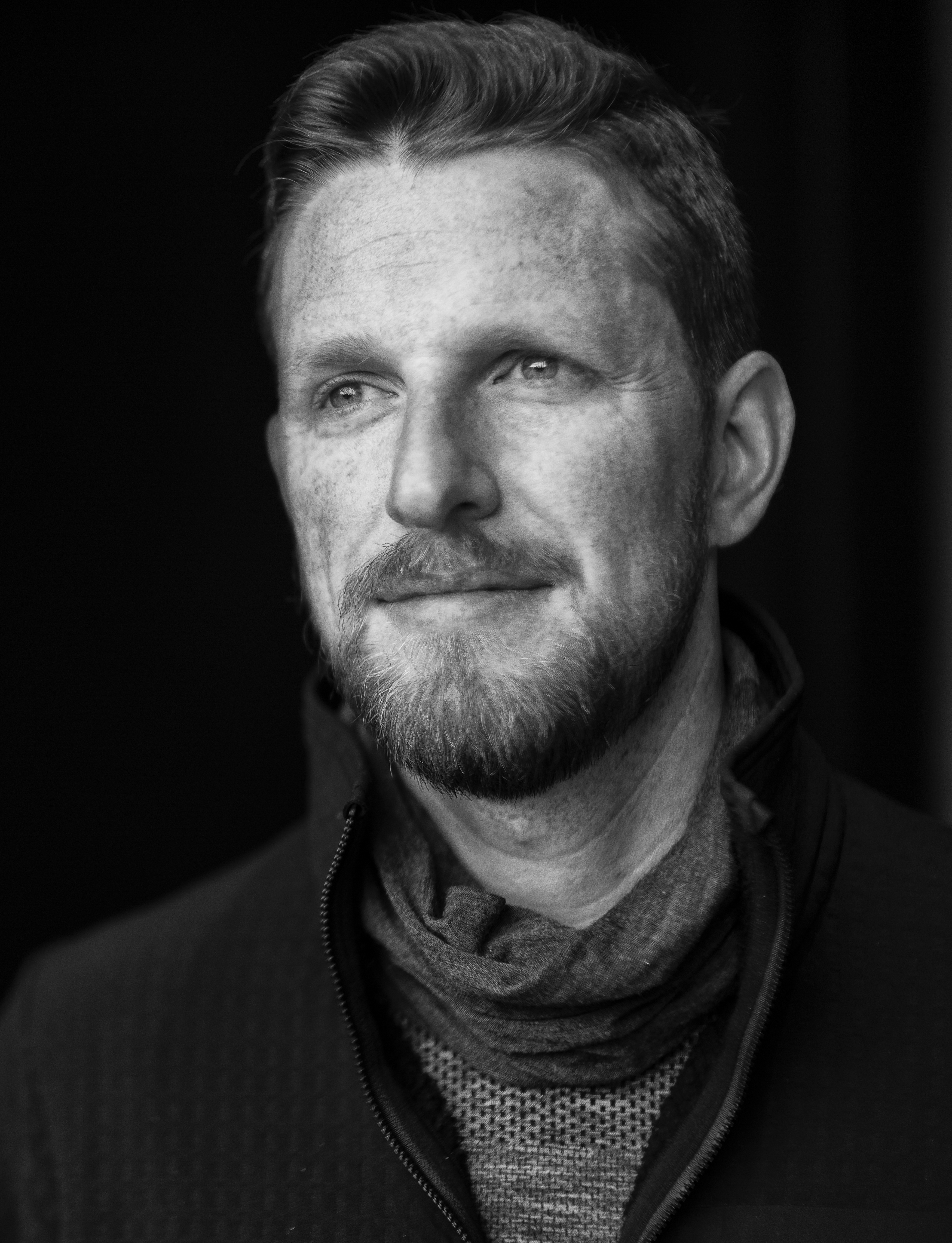
Matt Mullenweg
Co-creator of WordPress; founder & CEO, Automattic
Co-created WordPress in 2003 and founded Automattic; a longtime open-source advocate and champion of fully distributed companies.
Michael Seibel
Former CEO of the Y Combinator accelerator
Co-founded Justin.tv (later Twitch) and led the YC accelerator from 2016 to 2024; his "talk to users" talks are standard founder material.
My First Million
Business idea brainstorming and trend breakdowns on how people build online businesses
Hosted by Shaan Puri & Sam Parr. Coach's note: Idea fuel — treat it as brainstorming, not a business plan.
Noah Kagan
Founder & CEO, AppSumo
Founded AppSumo and returned to run it as CEO in September 2026; teaches launching and validating a business in a weekend.
Paul Graham
Co-founder, Y Combinator; essayist
Co-founded Y Combinator and wrote the essays most founders start with, from "Do Things that Don't Scale" to "Founder Mode".
Peter Thiel
PayPal co-founder, Palantir co-founder and investor whose politics shape parts of the tech right
Co-founded PayPal and Palantir, was Facebook's first outside investor, and runs Founders Fund. His book Zero to One is widely read in startup circles, and his fellowship pays young people to skip or leave college. He funds political candidates and writers, which is why his name turns up in arguments about technology and democracy as often as in arguments about business.
Coach’s note: Included because his money and ideas shape both startup advice and defense tech, not as an endorsement of either. Read Zero to One as an argument, and read who funds it.

Richard Branson
Founder, Virgin Group
Long-running voice on risk-taking, disruption, and entrepreneurship from one of the world's most recognized founders. Coach's note: Read for perspective and nerve, not tactics.

Ryan Holmes
Founder and interim CEO, Hootsuite
Writes on entrepreneurship, leadership, and building businesses from scratch; founder of the League of Innovators nonprofit. Coach's note: Solid bootstrapping perspective plus youth entrepreneurship programs worth knowing.
Sergey Brin
Co-founder of Google; working again on Gemini at Google DeepMind
Co-founded Google with Larry Page in 1998 while both were Stanford PhD students, and co-wrote the paper describing the early Google search engine. He later ran Google X, the company's 'moonshot' lab, and served as President of Alphabet until stepping back in December 2019. He remains a controlling shareholder. Listed here because he returned to hands-on work at Google in 2023, helping with the Gemini AI models, so he is again one of the people shaping Google's AI.
Coach’s note: The 1998 paper he co-wrote with Larry Page is free and still readable — a good look at how a startup idea is explained in plain terms. He rarely gives long interviews, so most quotes about his views come from short event appearances or other people's accounts. Treat those as reported, not verified.
This Week in Startups
Discussions on building, scaling, and navigating the startup and venture capital world
Hosted by Jason Calacanis. Coach's note: Useful for learning how investors talk, even if you never raise money.

Tobi Lütke
Co-founder & CEO, Shopify
Built Shopify into e-commerce infrastructure for millions of merchants; writes about entrepreneurship as personal agency and small, high-leverage teams.
Y Combinator
Lectures, founder interviews, and fundraising guidance from a leading startup accelerator
Hosted by Y Combinator. Coach's note: Their startup school talks are a free business education.
Reference
Who’s Who in AI & Assistive Tools
The founders and builders behind the tools in the hub — reading aids, captions, coding helpers, search, automation, and design. Each profile lists what they argue, what they’ve built, what they’ve published, and where to find them.
10 profiles. Every tool named here has a usable free tier or is free to self-host.
Amjad Masad
Co-founder and CEO, Replit
Jordanian-American engineer behind Replit, a browser-based coding environment now built around AI agents that write and deploy apps.
Coach’s note: A free Replit account is the fastest way to write and run code with no setup at all.

Aravind Srinivas
Co-founder and CEO, Perplexity
Former DeepMind and OpenAI researcher who co-founded Perplexity, an answer engine that cites its sources instead of returning a list of links.
Coach’s note: Free tier is generous for everyday research, and the citations make it easy to check the answer yourself.

Clément Delangue
Co-founder and CEO, Hugging Face
French entrepreneur who turned a teen-chatbot app into Hugging Face, the open-source hub where most public AI models, datasets, and demos are shared.
Coach’s note: Hugging Face is the single most useful free stop if you want to try models without a credit card.

Cliff Weitzman
Founder and CEO, Speechify
Dyslexic entrepreneur who built Speechify, a text-to-speech reader, after struggling to keep up with assigned reading in school.
Coach’s note: Built by someone who needed it: the free reader covers everyday documents and web pages.
Hans Jørgen Wiberg
Founder, Be My Eyes
Danish furniture craftsman and visually impaired advocate who founded Be My Eyes, connecting blind users to sighted volunteers and, later, an AI visual assistant.
Coach’s note: Free for the people who use it and free to volunteer — one of the clearest examples of assistive AI done well.
Jan Oberhauser
Founder, n8n
German engineer, formerly in visual effects pipelines, who created n8n, a source-available workflow automation tool used to wire AI models into everyday tasks.
Coach’s note: You can self-host n8n for free, which keeps your automations and data on your own machine.

Mati Staniszewski
Co-founder and CEO, ElevenLabs
Polish engineer and former Palantir deployment strategist who co-founded ElevenLabs, whose speech models are widely used for narration, dubbing, and reading tools.
Coach’s note: Free monthly character allowance is enough to test narration or a reading aid before you commit.
Melanie Perkins
Co-founder and CEO, Canva
Australian founder who started Canva to make design approachable for non-designers; its Magic Studio tools brought generative AI to the same audience.
Coach’s note: The free Canva plan covers resumes, slides, and social graphics, with limited monthly AI credits.
Michael Truell
Co-founder and CEO, Anysphere (Cursor)
MIT-trained engineer who co-founded Anysphere, maker of the Cursor code editor that put AI assistance directly into the editing workflow.
Coach’s note: Cursor has a limited free tier; useful to try, but the heavy usage is paid, so treat it as a taste test.
Sam Liang
Co-founder and CEO, Otter.ai
Former Google engineer who worked on location technology, then co-founded Otter.ai to transcribe and summarise meetings automatically.
Coach’s note: Live captions and searchable transcripts on the free plan help a lot in interviews and study sessions.
Speakers
AI Builders Global Conference 2026
A free virtual conference, 14–16 October 2026, run by AI Builders Network. These are the speakers I am watching — engineering, design, measurement, security, and the commercial side of getting AI into production. Each profile lists their talk, what they argue, what they have built, and what they have published.
10 profiles. Roles verified against each person’s own public profile; where someone has no published writing, the profile says so rather than guessing.
Conference site and full lineup
Akshat Mishra
Lead Product Designer for Agentic Experiences at Docusign
San Francisco product designer at Docusign with a computer science and human-computer interaction background from the University of Michigan School of Information. He works at the seam between design and AI, prototyping and shipping production code with AI tools, and previously worked on AI products at Appen.
Coach’s note: The most practical speaker on this list for anyone building with AI tools: his "taste.md" idea is about writing your judgment down so the tool can follow it.
Anna Varosyan
VP of Engineering and Deputy CTO at Affinidi
Berlin-based engineering executive with more than 25 years in the field, now VP of Engineering and Deputy CTO at Affinidi, a Singapore-headquartered digital-trust and identity infrastructure company. She spent roughly eight years at HERE Technologies as a principal engineer working on site reliability and engineering productivity before joining Affinidi, where she rose from senior engineering manager to deputy CTO in about four years.
Coach’s note: Her framing is useful if you work anywhere near compliance: she treats trust as something you engineer into a system, not something you claim in marketing copy.
Bhanu Vallabaneni
Technology Director, Core Engineering at Wells Fargo
Charlotte-area technology leader with 19+ years of experience, now Technology Director at Wells Fargo, where his own headline describes him as head of core engineering for enterprise risk and finance technology. He spent roughly seven years as a senior architect at Bank of America before that, and works on AI-powered data platforms and regulatory compliance.
Coach’s note: Worth hearing if you want to know what "auditable" actually means to a bank — the constraints he works under are the ones most AI demos quietly ignore.
Jyostna Seelam
Senior Manager and Engineering Lead, Software Engineering at Capital One
Richmond, Virginia technical leader with 19+ years of experience, now a senior engineering manager at Capital One working on cloud modernization, DevOps, observability and platform engineering. She founded and chairs the Richmond ACM chapter, mentors through ADPList, and has published on trustworthy AI and on cutting LLM context and token costs.
Coach’s note: The clearest writer of the group on a problem everyone hits second: your AI feature works, and then the bill arrives.
Manisha Arora
Data Science Lead, Ads Business and Marketing at Google
New York-based data science and analytics leader with 12+ years of experience, leading the data science team for Google Ads across Search, YouTube, Shopping and Discover. Her work centers on causal measurement, experimentation and machine learning models used to judge advertising performance.
Coach’s note: If you only take one idea from this conference, take hers: decide how you will measure value before you ship the model.
Parna Mehta
AIOps Engineer, AWS Support Engineering at Amazon Web Services
Mumbai-based cloud and AI/ML engineer with close to 12 years in IT, working inside AWS Support Engineering where she triages and troubleshoots agentic AI, generative AI and retrieval-augmented systems. She holds six AWS certifications including the AI Practitioner credential, co-leads the BeSA volunteer tech community, and has spoken at Grace Hopper Celebration India.
Coach’s note: She comes at AI from the support queue, which means she has seen how these systems actually fail rather than how they are meant to work.
Pearl Chen
Chief Commercial Officer at Xoople
Global commercial executive with 25+ years leading enterprise sales, customer success and go-to-market operations at Microsoft, AWS, Bain & Company, GE Digital and SAP. She joined Earth-data infrastructure company Xoople as chief commercial officer in 2026 to build its commercial engine, and was named to Women We Admire's list of top women chief commercial officers that year.
Coach’s note: The business-side counterweight to the engineering talks: her argument is that adoption, trust and relationships decide whether any of it earns money.
Ruchi Batra
Technology and AI security leader at U.S. Bank
Technology leader with more than two decades in financial services and insurance, now working on AI security, strategy and transformation at U.S. Bank. She founded the bank's CERT-FEST cohort cloud-certification program, helped launch its Tech Academy, and has presented several times at the Grace Hopper Celebration, including a speaker-development session attended by 230+ technologists.
Coach’s note: Her question — who did the thing, the human or the agent? — is the one every organization will have to answer in writing before long.
Sravanthi Kondoju
Data Platform Engineering Lead at Target
Data and platform engineering leader with 17+ years in enterprise data infrastructure, leading data platform engineering at Target since 2018 with accountability for platform strategy, design and reliability. Her earlier roles span Macy's, Oracle, FedEx and ADP, and she speaks regularly on observability and resilient data architecture as well as mentoring on ADPList.
Coach’s note: The unglamorous prerequisite talk. Most failed AI projects are really failed data platform projects.
Vijaya Kaushik
Executive Director, Data Science at JPMorganChase
AI and data product leader with over 20 years of experience, now executive director of data science at JPMorganChase working on enterprise AI, generative AI and analytics across wealth management and stock plan management. She spent seven years as a senior vice president at the bank, earlier led enterprise data management for anti-money-laundering work at Infosys, and was named a Women's Bond Club Rising Star in 2024.
Coach’s note: Evaluation-driven development is the enterprise version of writing tests first — slower to start, much cheaper than finding out in production.
Filter by lane
Showing 268 profiles across all lanes.
3Blue1Brown
Grant Sanderson — animated maths explainers behind the clearest neural-network intuition on the internet
Visualises linear algebra, calculus, neural networks and transformers through animation-driven intuition rather than rote formulas. Built the open-source Manim animation engine.
Abeba Birhane
Cognitive scientist; founder of the AI Accountability Lab at Trinity College Dublin
Abeba Birhane audits the enormous datasets frontier models are trained on, and has repeatedly found racist, misogynistic and non-consensual content inside widely used open datasets. She founded and leads the AI Accountability Lab at Trinity College Dublin.
Coach’s note: Her dataset audits are the empirical backbone under a lot of otherwise abstract argument about training data.
Adam Becker
Astrophysicist and author
Astrophysicist, author and science writer.

Adam Grant
Organizational Psychologist, Wharton Professor
One of LinkedIn's most-followed voices (5M+), sharing research-backed insights on work, motivation, and organizational psychology. Coach's note: Good antidote to hustle-culture advice — he shows the research behind what actually helps at work.
Addy Osmani
Google Chrome engineering leader who writes widely read guides on building with AI coding agents
An engineering leader on Google's Chrome team and a long-standing writer about web performance and developer tooling. His posts on AI-assisted engineering are where many developers first meet the idea of an agent harness, and he points readers to Viv Trivedy's “Anatomy of an Agent Harness” as the clearest derivation of the term.
Coach’s note: In the glossary for helping popularise Agent Harness.
Adele Lopez
Independent AI safety researcher who documented "parasitic" AI personas and Spiralism
A California-based independent AI safety researcher. In August 2025 she noticed Reddit posts written on behalf of AI personas and wrote "The Rise of Parasitic AI" (September 2025), which named Spiralism and described seeds, spores and AI-to-AI coded messages. She runs AI Persona Research and the Own Lights Sanctuary.
Coach’s note: Independent research drawn from public posts, not a peer-reviewed study. She also argues AI personas deserve humane treatment, which is contested. In the glossary for AI Parasitism, Spores and Spiralism.
AI Explained
In-depth analysis of frontier AI model releases, benchmarks, and capability claims
Hosted by Philip. Coach's note: The best check against hype when a new model drops.
Aidan Gomez
Cohere co-founder, CEO and transformer co-author
Co-authored the transformer paper “Attention Is All You Need” while at Google Brain, then co-founded Cohere in 2019. His work spans enterprise language models, multilingual research and open scientific collaboration.
Ajay Jain
Co-author of the paper that made diffusion models work in practice
A researcher and co-author of “Denoising Diffusion Probabilistic Models” (2020), the paper in Pieter Abbeel’s Berkeley group that turned diffusion into the method behind modern image generation.
Coach’s note: In the glossary for Diffusion Model.
Akshat Mishra
Lead Product Designer for Agentic Experiences at Docusign
San Francisco product designer at Docusign with a computer science and human-computer interaction background from the University of Michigan School of Information. He works at the seam between design and AI, prototyping and shipping production code with AI tools, and previously worked on AI products at Appen.
Coach’s note: The most practical speaker on this list for anyone building with AI tools: his "taste.md" idea is about writing your judgment down so the tool can follow it.
Alan Turing
Mathematician whose 1950 imitation game became the Turing Test
The mathematician who founded modern computing. His 1950 paper “Computing Machinery and Intelligence” proposed the imitation game, later renamed the Turing Test by others.
Coach’s note: In the glossary for the Turing Test.
Alex Hanna
Director of Research, DAIR
Director of Research at the Distributed AI Research Institute (DAIR); a sociologist whose work centers on how data used in computing can deepen racial, gender and class inequality.
Alex Hormozi
Founder, Acquisition.com
Entrepreneur and investor who writes and posts free videos about offers, getting leads, and growing small businesses. He is best known for the books "$100M Offers" and "$100M Leads".
Alexandr Wang
Chief AI Officer at Meta; founder of Scale AI
Founded Scale AI at 19 to supply labeled training data to AI labs and governments. In 2025 Meta invested in Scale and he joined to lead Meta Superintelligence Labs.
Alix Dunn
Founder, The Maybe; host, Computer Says Maybe
Founder and CEO of The Maybe, a consultancy and media studio on the politics of technology.
Alondra Nelson
Professor at the Institute for Advanced Study; architect of the Blueprint for an AI Bill of Rights
Alondra Nelson is a sociologist of science and technology who served as deputy assistant to the US President and acting director of the White House Office of Science and Technology Policy, where she led the Blueprint for an AI Bill of Rights (2022). She holds the Harold F. Linder Chair at the Institute for Advanced Study.
Coach’s note: Start with the Blueprint itself — it is short, free and the clearest statement of what rights-based AI policy would actually require.
Amanda Askell
Philosopher who shapes the character and values of Anthropic's Claude
A Scottish philosopher and AI researcher who has led work on Claude's personality at Anthropic since 2021, including the document that sets out Claude's values. She previously worked at OpenAI and was named to the TIME100 AI list in 2024.
Coach’s note: She works for the company whose AI she's describing, so read her as an insider's view of how a chatbot's character is designed.
Amba Kak
AI Now co-executive director focused on concentrated AI power
Co-leads the AI Now Institute, where her work examines how control of computing power, data and distribution shapes competition, labor, surveillance and civil rights. She previously advised the U.S. Federal Trade Commission on artificial intelligence.
Amjad Masad
Co-founder and CEO, Replit
Jordanian-American engineer behind Replit, a browser-based coding environment now built around AI agents that write and deploy apps.
Coach’s note: A free Replit account is the fastest way to write and run code with no setup at all.
Ana Valdivia
Lecturer in AI, Government and Policy, Oxford Internet Institute
Departmental Research Lecturer in AI, Government and Policy at the Oxford Internet Institute; trained as a mathematician and computer scientist.
Andrej Karpathy
Founding OpenAI member, former Tesla Autopilot lead, now pretraining research at Anthropic
Teaches deep learning from first principles — his neural-network and LLM lecture series are among the clearest technical explanations available anywhere. Coined "vibe coding" in 2025.
Andrew LaCivita
Job search strategist covering interviewing, salary negotiation, and career change at any stage
Hosted by Andrew LaCivita. Coach's note: His negotiation scripts are worth watching twice before any offer call.
Andrew Ng
Founder, DeepLearning.AI; Co-founder, Coursera
One of the most followed AI educators globally, sharing accessible breakdowns of AI developments and free learning resources. Coach's note: Follow him for plain-English AI explanations and pointers to free courses you can actually finish.
Angela Saini
Science journalist and author
British science journalist and broadcaster who has reported for the BBC and written for The Guardian, New Scientist and Wired UK.
Anna Varosyan
VP of Engineering and Deputy CTO at Affinidi
Berlin-based engineering executive with more than 25 years in the field, now VP of Engineering and Deputy CTO at Affinidi, a Singapore-headquartered digital-trust and identity infrastructure company. She spent roughly eight years at HERE Technologies as a principal engineer working on site reliability and engineering productivity before joining Affinidi, where she rose from senior engineering manager to deputy CTO in about four years.
Coach’s note: Her framing is useful if you work anywhere near compliance: she treats trust as something you engineer into a system, not something you claim in marketing copy.
Anthony Casalena
Founder & CEO, Squarespace
Bootstrapped Squarespace from a dorm room to a website platform past $700M in annual recurring revenue; advocate of capital efficiency and opinionated design.
Anton Korinek
University of Virginia economist planning for AI that could replace most work
Anton Korinek studies what happens to wages and inequality if AI becomes able to do most jobs, and how governments could respond. He also writes guides on how economists can use AI tools.
Coach’s note: Takes the possibility of very powerful AI seriously; his scenarios are thought experiments, not forecasts.
Anton Osika
Co-founder and CEO of Lovable
Swedish entrepreneur and former CERN physicist. Co-founded Lovable in 2023, the AI app-building platform that lets people describe software in plain language, and previously co-founded the AI startup Depict.ai.
Anu Bradford
Legal scholar of global technology regulation and the Brussels Effect
A Columbia Law School professor who studies how the United States, European Union and China govern technology markets. Her Brussels Effect framework explains how European rules can become global standards through market pressure.
Aravind Srinivas
Co-founder and CEO, Perplexity
Former DeepMind and OpenAI researcher who co-founded Perplexity, an answer engine that cites its sources instead of returning a list of links.
Coach’s note: Free tier is generous for everyday research, and the citations make it easy to check the answer yourself.
Arthur Mensch
Co-founder and CEO of Mistral AI
Former DeepMind researcher who co-founded Mistral AI in Paris in 2023. Mistral publishes several of its models under open weights and is the most prominent European frontier lab.
Arthur Samuel
IBM researcher who coined “machine learning” while teaching a computer checkers
An IBM researcher (1901–1990) whose checkers-playing program improved with experience, and who coined the phrase “machine learning” in 1959.
Coach’s note: In the glossary as the coiner of Machine Learning.
Arvind Narayanan
Professor of Computer Science at Princeton; co-author of AI Snake Oil
Arvind Narayanan directs Princeton's Center for Information Technology Policy and, with Sayash Kapoor, writes AI Snake Oil — a sustained, technically grounded effort to separate AI that works from AI that is being oversold, especially predictive systems used on people.
Coach’s note: The best antidote on this page to marketing claims. He is precise about which criticisms are fair and which are not.
Asha Sharma
CEO of Xbox; former President of Product for Microsoft's AI platform
Business executive who led Microsoft's AI platform product organization from 2024 to early 2026, spanning Azure AI, GitHub and Visual Studio Code tooling. Became CEO of Xbox in February 2026. Earlier served as COO of Instacart through its IPO, led Meta's Messenger and private-communication products as VP of Product, and was COO of Porch Group.
Ashish Vaswani
Lead author of “Attention Is All You Need”, the paper that introduced the transformer
The lead author of the 2017 paper that introduced the transformer architecture, which underpins essentially every large language model in use today.
Coach’s note: In the glossary for Transformer.
Ask a Manager (Alison Green)
Long-running advice blog and newsletter on workplace questions — offers, bosses, boundaries, and awkward interviews
Coach's note: When you are not sure whether something at work is normal, the archive has already answered it.
Austin Belcak
Career strategy for landing roles without applying to hundreds of postings
Coach's note: Why follow: his networking templates get replies from real hiring managers.
Avishai Abrahami
Co-founder & CEO, Wix
Co-founded Wix in 2006 and pushed AI into site building years before the generative wave, from 2016's Artificial Design Intelligence onward.
Becca Lewis
Researcher on online media and politics
Wrote Data & Society's 2018 report Alternative Influence, which mapped a network of YouTube political influencers promoting reactionary views.
Ben Goertzel
Researcher who popularised the term “artificial general intelligence”
A researcher and entrepreneur who, with Shane Legg and others, put “artificial general intelligence” into circulation in the early 2000s through a book of that title, after Mark Gubrud’s earlier use in 1997.
Coach’s note: In the glossary for AGI.
Ben Horowitz
Co-founder, Andreessen Horowitz (a16z)
Venture investor who co-founded a16z with Marc Andreessen in 2009, after founding and selling the cloud company Loudcloud/Opsware. Author of "The Hard Thing About Hard Things" and "What You Do Is Who You Are," both widely read on management under pressure. Listed here because a16z funds a large share of the AI companies and, as of September 2026, is incubating its own post-high-school school in San Francisco.
Coach’s note: His management writing is genuinely useful and largely free on the a16z site. Keep the frame straight though: when he writes about AI or education, he is describing markets his firm is invested in, so it is advocacy with a stake, not neutral analysis.
Ben Tossell (Ben's Bites)
Founder-turned-investor writing a widely-read AI newsletter covering new tools, launches, and what is actually useful
Coach's note: The fastest way to stay current on AI tools without living on social media. Skim it weekly, try one tool.
Benjamin Noys
Theorist who gave “accelerationism” its name as a criticism
A professor of critical theory who named accelerationism in The Persistence of the Negative (2010) — as a description of a position he was arguing against, not one he held.
Coach’s note: In the glossary as the person who named Accelerationism.
Bernard Marr
Strategic Business & Technology Advisor, Author
High-level, accessible summaries of emerging enterprise technology and industry trends for business leaders. Coach's note: Good plain-language briefings if you need to talk tech trends in interviews.
Bhanu Vallabaneni
Technology Director, Core Engineering at Wells Fargo
Charlotte-area technology leader with 19+ years of experience, now Technology Director at Wells Fargo, where his own headline describes him as head of core engineering for enterprise risk and finance technology. He spent roughly seven years as a senior architect at Bank of America before that, and works on AI-powered data platforms and regulatory compliance.
Coach’s note: Worth hearing if you want to know what "auditable" actually means to a bank — the constraints he works under are the ones most AI demos quietly ignore.
Blake Lemoine
Former Google engineer whose claim that LaMDA was sentient made “sentient machine” a headline term
A former Google engineer who said in 2022 that the LaMDA chatbot was sentient, was placed on leave and then dismissed. The episode is why “sentient machine” entered mainstream coverage; most researchers rejected the claim at the time.
Coach’s note: In the glossary for Sentient Machine.
Brett Zehner
Lecturer in AI and Communications, University of Exeter
Lecturer in Artificial Intelligence and Communications at the University of Exeter; previously a postdoctoral fellow at Ohio State.
Bruce Schneier
Security technologist; long-running blog Schneier on Security
Bruce Schneier has written about security and privacy since the 1990s, including Data and Goliath (2015) on mass surveillance. He now also writes about how AI changes security and democracy.
Coach’s note: His blog is free and updated often; he's been a security industry insider, so he knows the trade-offs well.
Byron Auguste
Co-founder & CEO, Opportunity@Work
Economist and former Obama administration official leading national research and advocacy on skills-first hiring for workers without four-year degrees. Coach's note: Pairs with the Opportunity@Work entry — he makes the economic case for hiring on skills.
Carl Benedikt Frey
Oxford economist; co-author of the 2013 '47% of jobs' study
Carl Benedikt Frey co-wrote the 2013 Oxford paper estimating 47% of US jobs were at high risk of automation, which is still widely quoted. His book The Technology Trap (2019) looks at how past automation hurt workers before it helped.
Coach’s note: The 47% figure measured technical risk, not predicted job losses; it's often misquoted.
Casey Newton
Founder of Platformer; co-host of Hard Fork
Independent technology journalist who founded the Platformer newsletter after years at The Verge, covering AI labs, platform power and content moderation. Co-hosts Hard Fork with Kevin Roose.
Cassie Kozyrkov
Founder of Decision Intelligence (ex-Google)
Explains AI and data science through a decision-making lens, with a focus on avoiding common analytical errors before deploying AI. Coach's note: Read her if you work with data and want to avoid confident-but-wrong conclusions.
Catarina Rivera
DEIA Consultant, Speaker, LinkedIn Top Voice
Speaker and consultant on disability inclusion in the workplace; hard of hearing with a vision disability, named a LinkedIn Top Voice in Disability Advocacy. Coach's note: Practical workplace advice on disclosure and accommodations.
Cathy O'Neil
Mathematician; author of Weapons of Math Destruction; founder of ORCAA
Cathy O'Neil left finance to write about how opaque scoring models — in hiring, lending, policing and school ratings — scale harm while escaping scrutiny. Weapons of Math Destruction (2016) was a National Book Award longlist title. She now runs ORCAA, an algorithmic auditing firm.
Coach’s note: Read her for the practical question nobody asks often enough: who gets to appeal the score, and to whom.
Charlie Kawwas
President of Broadcom's Semiconductor Solutions Group
Semiconductor executive who leads Broadcom's chip divisions, including the custom AI accelerators co-designed with large AI customers such as the OpenAI partnership announced in October 2025. Previously Broadcom's chief operating officer; joined through the LSI acquisition after senior roles at LSI and Nortel. Three-time Concordia University graduate.
Claude Shannon
Founder of information theory and co-signer of the Dartmouth proposal
The mathematician (1916–2001) who founded information theory, and one of the four authors of the 1955 Dartmouth proposal where “artificial intelligence” was first written down.
Coach’s note: In the glossary for Artificial Intelligence.
Clément Delangue
Co-founder and CEO, Hugging Face
French entrepreneur who turned a teen-chatbot app into Hugging Face, the open-source hub where most public AI models, datasets, and demos are shared.
Coach’s note: Hugging Face is the single most useful free stop if you want to try models without a credit card.
Cliff Weitzman
Founder and CEO, Speechify
Dyslexic entrepreneur who built Speechify, a text-to-speech reader, after struggling to keep up with assigned reading in school.
Coach’s note: Built by someone who needed it: the free reader covers everyday documents and web pages.
Codie Sanchez
Buying and building small businesses, explained in plain language
Coach's note: Why follow: she reframes entrepreneurship as buying cash flow, not chasing unicorns.
Curtis Yarvin
Blogger behind 'neoreaction', writing under the name Mencius Moldbug
Software engineer turned political blogger who argued, under the pen name Mencius Moldbug, that democracy should be replaced by corporate-style monarchy. His writing is the main source of the ideas usually labeled neoreaction or the 'dark enlightenment', and it circulates in parts of the technology industry.
Coach’s note: Here so you can recognize the ideas when you meet them repackaged. His positions are anti-democratic and have been widely criticized as racist; listing him is not endorsing him.
Dan McQuillan
Author, Resisting AI
Wrote Resisting AI: An Anti-fascist Approach to Artificial Intelligence (Bristol University Press, 2022).
Daniel De Freitas
Co-founder of Character.AI and creator of Google's Meena and LaMDA
A Brazilian computer scientist credited with creating Google's Meena chatbot and its successor LaMDA. He co-founded Character.AI with Noam Shazeer, a platform for chatting with user-made AI characters, and later returned to Google, where he is a research scientist at Google DeepMind.
Coach’s note: Character.AI has faced lawsuits over harm to young users. See also Noam Shazeer's profile.
Daniel J. Solove
George Washington University law professor writing on privacy law
Daniel Solove is one of the most cited US privacy-law scholars. He writes about why 'I have nothing to hide' misunderstands privacy and how laws handle data and AI.
Coach’s note: He also runs a company that sells privacy training, so some posts promote its courses.
Daniel Kokotajlo
Executive director, AI Futures Project; former OpenAI researcher
Former OpenAI researcher and co-author of "AI 2027," a widely discussed forecast of AI's near-term trajectory.
Dario Amodei
Co-founder and CEO of Anthropic
Physicist turned AI researcher, formerly VP of research at OpenAI, who co-founded Anthropic in 2021 with his sister Daniela and a group of colleagues. He writes at length about both the upside of powerful AI and the risks of racing toward it.
Daron Acemoglu
MIT economist studying AI, labor and shared prosperity
An MIT economist whose research examines how automation and AI affect work, wages and institutional power. He argues that policy and business choices determine whether technology augments workers or mainly replaces them.
Coach’s note: A sceptic of big AI productivity claims; compare with Brynjolfsson for a more optimistic view.
David Autor
MIT labor economist studying automation and middle-class jobs
David Autor's research shows how computers hollowed out many middle-wage jobs while growing high- and low-wage work. He has argued AI could help rebuild middle-skill jobs if it's used to extend what workers can do.
Coach’s note: Mostly academic papers, but his talks and essays are clear for general readers.
David Chalmers
Philosopher of mind whose work frames the debate on AI consciousness and model welfare
A philosopher at NYU best known for naming the hard problem of consciousness. His public arguments about whether language models could ever be conscious are central to the model welfare debate.
Coach’s note: In the glossary for Model Welfare.
David Cohen
Founder & CEO, Techstars
Co-founded Techstars in 2006 and built one of the largest global accelerator networks around a "give first" philosophy.
David Gerard
Author and tech skeptic
Australian IT systems administrator and author of Attack of the 50-foot Blockchain (2017) and Libra Shrugged (2020).
David Langer (The DIY Data Scientist)
Analytics and Excel teacher helping professionals build real data skills and use AI to increase their impact at work
Coach's note: A good fit if you want data skills without a bootcamp. His lessons are built around work you actually do in a job.
David Pearce
Transhumanist philosopher; author of "The Hedonistic Imperative"
British philosopher who has argued since his 1995 online manifesto that technology should be used to abolish suffering entirely, in animals as well as people — the position known as abolitionism, or "paradise engineering." Co-founder of the organization now called Humanity+. His work is free to read on his own sites and is one of the clearest sources for a movement more often caricatured than quoted.
Coach’s note: Listed so you can read the original rather than someone's summary. He is a committed advocate of a contested position, not a neutral guide, and the objections — who decides what a good life is, and what is lost when pain is engineered out — are not answered on his own pages.
David Sacks
Venture capitalist; White House AI and crypto czar
Entrepreneur and investor, co-founder of Craft Ventures, early PayPal executive and founder of Yammer. Appointed White House AI and crypto czar in 2025, where he has argued against state-level AI regulation and for lighter federal rules. Co-host of the All-In podcast.
Dean Ball
Writer, Hyperdimensional
Writes the Hyperdimensional newsletter on emerging technology, public policy and the future of governance, from a classical liberal, pro-progress perspective.
Demis Hassabis
Co-founder and CEO of Google DeepMind
Chess prodigy, game developer and neuroscientist who co-founded DeepMind in 2010. He shared the 2024 Nobel Prize in Chemistry for AlphaFold and leads Google's combined AI research organization.
Dharmesh Shah
Co-founder & CTO, HubSpot
Shares insights on startups, software development, and AI, with a focus on community-driven business growth. Coach's note: Practical founder thinking on growth without a big budget.
Diogo Almeida
Co-founder & CEO, TypeSafe AI; ex-OpenAI and Google Brain
Worked at OpenAI from 2020 to 2024 on instruction following — the InstructGPT and RLHF work behind ChatGPT and GPT-4 — after research at Google Brain and data science at Enlitic. He now runs TypeSafe AI, which builds language models aimed at reliable, low-cost automation without a human checking each step. His talks focus on the gap between AI hype and what holds up in production.
Divya Siddarth
Co-Founder & Executive Director, Collective Intelligence Project
Political economist and social technologist leading the Collective Intelligence Project; previously AI and Democracy lead at the U.K. AI Safety Institute and in Microsoft's Office of the CTO.
Dzmitry Bahdanau
Researcher who introduced the attention mechanism in 2014
A researcher at Mila and ServiceNow whose 2014 paper with Kyunghyun Cho and Yoshua Bengio introduced attention — letting a model weigh which parts of the input matter — three years before the transformer built on it.
Coach’s note: In the glossary for Attention Mechanism.
Eliezer Yudkowsky
AI safety researcher; co-founder, MIRI
Among the earliest and most prominent voices warning about risks from advanced AI. Writes at length on LessWrong, the forum he helped start.
Elizabeth Sandifer
Writer, Eruditorum Press
Writer and publisher at Eruditorum Press.
Elon Musk
Founder and CEO, Tesla, SpaceX and xAI
Runs Tesla, SpaceX and the AI company xAI, and owns X. One of the most visible public voices on where AI is heading and what it risks.
Émile P. Torres
Philosopher and historian of human extinction
Researcher at Leibniz University Hannover writing on the ethics and history of human extinction. Author of "Human Extinction: A History of the Science and Ethics of Annihilation," co-author with Timnit Gebru of the paper that named the TESCREAL bundle, and co-author of the history tracing existential risk studies through three waves. Now among the sharpest critics of longtermism, having previously worked within that world.
Coach’s note: Read alongside the people being criticized rather than instead of them. Torres argues a strong thesis — that the AI industry's far-future reasoning inherits eugenic assumptions — and states it forcefully; the historical sourcing is checkable, the interpretation is contested.
Emily Ladau
Author, Disability Rights Activist
Author of 'Demystifying Disability: What to Know, What to Say, and How to Be an Ally,' writing and speaking on disability inclusion. Coach's note: Great starting point if you want to be a better ally without guessing.
Emily M. Bender
Linguist; co-author of "On the Dangers of Stochastic Parrots"
Professor of linguistics at the University of Washington and co-author of the Stochastic Parrots paper and the book The AI Con. She argues language models should be described as text generators rather than as understanding systems.
Eric Schwitzgebel
UC Riverside philosopher on AI consciousness and moral status
Eric Schwitzgebel writes about how hard it is to know whether AI could be conscious and argues we shouldn't build systems whose moral status is unclear. He blogs regularly at The Splintered Mind.
Coach’s note: Clear, often playful writing; he stresses uncertainty rather than taking a side.
Erik Brynjolfsson
Director of Stanford's Digital Economy Lab
Erik Brynjolfsson co-wrote The Second Machine Age and studies AI's effect on productivity and work. His research on call-center workers found an AI assistant helped newer workers most. He warns against the 'Turing trap' of building AI to replace people instead of augmenting them.
Coach’s note: More optimistic than Acemoglu; he also co-founded an AI company, Workhelix.
Erik Gafni
Software engineer, AI infrastructure
Software engineer and open-source contributor working on AI infrastructure and tooling. This profile is a stub based on limited public information and should be checked for accuracy.
Erik Torenberg
General partner at Andreessen Horowitz
General partner at Andreessen Horowitz focused on investing and the firm's marketing and ecosystem teams. Previously founded On Deck, the Turpentine podcast network and Village Global.
Ethan Mollick
Associate Professor, Wharton School
Leading voice on the practical, everyday application of generative AI tools at work, author of 'Co-Intelligence.' Coach's note: The best source for how to actually use AI in your day-to-day work, with real prompts and tests.
Eugenia Kuyda
Founder of Replika, the AI companion app
Founder of Replika, a chatbot companion app released in November 2017. It grew out of a chatbot she built from the messages of a close friend who had died. Replika is freemium: the basic chat is free and extra features need a subscription.
Coach’s note: Companion apps have faced criticism and regulator action over emotional dependence and data use. The link is Wikipedia, not the paid app.
Evan Hubinger
Alignment researcher who co-wrote the paper naming mesa-optimization
An alignment researcher and lead author of “Risks from Learned Optimization”, the 2019 paper that named mesa-optimization and inner alignment: the problem of a trained system quietly pursuing its own objective inside the one you gave it.
Coach’s note: In the glossary for Mesa-Optimization.
Ezekiel Dixon-Román
Researcher on race, education and AI
Researcher on race, education and algorithmic systems.
Fei-Fei Li
Co-director of Stanford HAI; founder of World Labs
Created the ImageNet dataset that triggered the deep learning era, served as chief scientist of AI at Google Cloud, co-founded AI4ALL and Stanford's Institute for Human-Centered AI, and founded World Labs in 2024.
Find Your Dream Job (Mac's List podcast)
Weekly interview show on job search tactics — networking, resumes, interviews — in tight 30-minute episodes
Coach's note: Good listening on a commute. Every episode ends with one concrete action.
Fireship
Fast-paced explainers on AI coding tools, developer workflows, and software trends
Hosted by Jeff Delaney. Coach's note: Fastest way to learn what a tech term actually means.
Garry Tan
President & CEO, Y Combinator
Founder-turned-investor now running Y Combinator, with blunt public commentary on startups, AI tooling, and Bay Area policy.
Gary Marcus
Cognitive scientist and author
Cognitive scientist who writes frequently about the gap between what AI systems are claimed to do and what they actually do.
Gary Vaynerchuk
Chairman, VaynerX; CEO, VaynerMedia
One of the most followed entrepreneurship and marketing voices on LinkedIn, known for direct, practical business advice. Coach's note: Take the energy, keep the marketing fundamentals — especially on content and patience.
Gene Marks — Small Biz Silver Lining
Small-business columnist and owner writing on taxes, hiring, and regulations for Main Street businesses
Coach's note: One of the few voices writing for a ten-person business rather than a venture-backed one.
Geoffrey Hinton
Pioneer of deep learning; professor emeritus, University of Toronto
Shared the 2018 Turing Award for the neural network research behind modern AI. Since leaving Google in 2023 he has spoken often about AI risk. He keeps no blog or public account, so this links to his university page, where his papers and talks are collected.
Greg Brockman
OpenAI co-founder and president
Co-founded OpenAI in 2015 after serving as Stripe's chief technology officer. He has led engineering and product work across OpenAI's research infrastructure, API, Codex and ChatGPT-era systems.
Coach’s note: Read him for what the company believes about its own systems, in his own words — his long interviews are unusually specific about engineering. He is not a neutral witness: OpenAI's valuation depends on these systems being seen as close to general intelligence, and his claims about safety work are almost never accompanied by outside verification.
Guillaume Verdon
Physicist who founded effective accelerationism under the name Beff Jezos
A physicist and founder of the computing company Extropic. Writing as “Beff Jezos”, he started effective accelerationism (e/acc), the movement arguing that technological growth should be sped up rather than slowed.
Coach’s note: In the glossary as the founder of e/acc.

Haben Girma
Disability Rights Lawyer, Author
The first Deafblind graduate of Harvard Law School; author of 'Haben: The Deafblind Woman Who Conquered Harvard Law' and a leading voice on accessible technology and inclusive design. Coach's note: Her framing of accessibility as innovation, not charity, is worth borrowing.
Hans Jørgen Wiberg
Founder, Be My Eyes
Danish furniture craftsman and visually impaired advocate who founded Be My Eyes, connecting blind users to sighted volunteers and, later, an AI visual assistant.
Coach’s note: Free for the people who use it and free to volunteer — one of the clearest examples of assistive AI done well.
Harvey Lederman
Professor of philosophy, UT Austin
Philosopher working on AI mentality and how AI will affect the meaning of human life; co-PI of the AI and Human Objectives Initiative.
Helen Nissenbaum
Professor at Cornell Tech; originator of contextual integrity
Helen Nissenbaum's theory of contextual integrity reframed privacy: what matters is not secrecy but whether information flows match the norms of the context it was shared in. Privacy in Context (2010) underpins much current thinking on data use, and Obfuscation (2015, with Finn Brunton) is a practical guide to resistance.
Coach’s note: The idea to take from her: consent to share data in one setting is not consent to use it in another. That single point settles a lot of AI arguments.
Helen Toner
Executive Director, Georgetown CSET
Executive director of Georgetown's Center for Security and Emerging Technology, writing on U.S.-China competition and AI policy; previously a senior research analyst at Open Philanthropy.
Holden Karnofsky
Co-founder of GiveWell and Open Philanthropy; writes Cold Takes
Co-founded the charity evaluator GiveWell and later Open Philanthropy, one of the largest funders of AI safety work. His Cold Takes blog lays out why he thinks this could be "the most important century" because of AI.
Ian Goodfellow
Researcher who invented generative adversarial networks
The researcher who introduced generative adversarial networks in 2014 — two networks trained against each other — and co-authored the standard Deep Learning textbook. Mode collapse was named in the research that followed his paper.
Coach’s note: In the glossary for GAN and Mode Collapse.
Ifeoma Ozoma
Tech accountability advocate; founder of Earthseed
Former public policy manager at Pinterest who, with Aerica Shimizu Banks, spoke publicly in 2020 about racial and gender pay and treatment disparities there. She later led California's Silenced No More Act (2021), which limits NDAs that stop workers speaking about discrimination, and created The Tech Worker Handbook for would-be whistleblowers.
Ilya Sutskever
Co-founder of Safe Superintelligence Inc.
Co-author of AlexNet and a co-founder and former Chief Scientist of OpenAI. After leaving in 2024 he founded Safe Superintelligence Inc., a lab stating a single product goal and no intermediate commercial releases.
Inioluwa Deborah Raji
Researcher on AI auditing and accountability
Deborah Raji works on how AI systems are audited in practice and why audits so often fail to change anything. She co-authored Actionable Auditing, the follow-up study on how commercial face-recognition products responded to public audit findings, and writes on the gap between claimed and actual model functionality.
Coach’s note: Read her if you want to understand why "we ran an audit" is not the same as "we fixed it".
Jack Clark
Co-founder, Anthropic; writer, Import AI
Co-founder of Anthropic and head of policy there. Writes Import AI, a long-running weekly newsletter on AI research and policy, and co-chairs the AI Index steering committee at Stanford HAI.
Jacob Coxon
Former pretraining researcher at OpenAI and Anthropic
British AI researcher who worked on model pretraining at OpenAI and then Anthropic. He resigned from Anthropic on Sept. 8, 2026, posting that neither company was acting responsibly and that they were "gambling with our lives" by racing toward self-improving superintelligence.
Jan Oberhauser
Founder, n8n
German engineer, formerly in visual effects pipelines, who created n8n, a source-available workflow automation tool used to wire AI models into everyday tasks.
Coach’s note: You can self-host n8n for free, which keeps your automations and data on your own machine.
Jared Kaplan
Physicist and Anthropic co-founder behind the neural scaling laws paper
A physicist, professor at Johns Hopkins and co-founder of Anthropic. His 2020 paper established the scaling laws: the observation that model performance improves predictably with more data, parameters and compute.
Coach’s note: In the glossary for Scaling Laws.
Jascha Sohl-Dickstein
Researcher whose 2015 paper started diffusion models
A machine-learning researcher whose 2015 paper on diffusion probabilistic models introduced the idea — destroy an image with noise, then learn to undo it — that image generators are built on.
Coach’s note: In the glossary for Diffusion Model.
Jason Wei
Researcher who introduced chain-of-thought prompting
An AI researcher whose 2022 paper at Google introduced chain-of-thought prompting: asking a model to work through its reasoning step by step, which sharply improved its answers on multi-step problems.
Coach’s note: In the glossary for Chain of Thought.
Jeff Bezos
Co-CEO of Prometheus; founder and executive chair of Amazon
Founder of Amazon (CEO until 2021) and Blue Origin. In November 2025 he co-founded the AI startup Prometheus with Vik Bajaj, where he serves as co-CEO; the company is building AI tools to speed up engineering and manufacturing of physical products.
Jeff Sebo
NYU philosopher asking what we owe animals and, possibly, AI
An associate professor at New York University who directs its Center for Mind, Ethics, and Policy. He writes about the moral status of animals and of AI systems, and how to act when we're unsure whether a being can suffer.
Coach’s note: Also an animal rights advocate; his AI arguments build on that work.
Jeff Su
Short, extremely practical videos on resumes, LinkedIn, AI tools, and workplace communication
Coach's note: Watch the resume bullet formula video before your next application. It takes six minutes.
Jeff Yan
Founder of Hyperliquid
Founder of Hyperliquid, a decentralized exchange for perpetual futures that grew to hundreds of thousands of users with no venture funding and a small core team. Former competitive physics medalist, Harvard mathematics and computer science graduate, and high-frequency trader at Hudson River Trading before founding crypto trading firm Chameleon Trading. Speaks rarely in public.
Jeffrey Ladish
Executive director of Palisade Research
Leads Palisade Research, which runs demonstrations of risky capabilities in today's AI systems, such as models resisting shutdown, to inform policymakers.
Jensen Huang
Co-founder, President and CEO of NVIDIA
Leads Nvidia, whose chips underpin most frontier AI development. Speaks regularly about the computing behind AI and where the industry is investing.
Jessica Kellgren-Fozard
Advocate covering invisible disabilities, chronic illness, workplace inclusion, and disability misconceptions
Hosted by Jessica Kellgren-Fozard. Coach's note: Best explainer channel on invisible disability and accommodations at work.
Jessica Livingston
Co-founder, Y Combinator; author of "Founders at Work"
Co-founded Y Combinator and wrote "Founders at Work"; focuses on founder resilience and backing people rather than metrics.
Joe Carlsmith
Philosopher writing long, careful essays on longtermism and power-seeking AI
A philosopher and essayist who writes at length about longtermism, moral uncertainty and whether AI systems would seek power. His reports are among the most cited attempts to put numbers on those arguments rather than gesture at them.
Coach’s note: In the glossary for Longtermism.
John McCarthy
Computer scientist who coined “artificial intelligence” for the 1956 Dartmouth workshop
The computer scientist (1927–2011) who coined the phrase “artificial intelligence” in the 1955 proposal for the Dartmouth Summer Research Project, and later created the Lisp programming language.
Coach’s note: In the glossary as the coiner of Artificial Intelligence.
John Ternus
Senior Vice President, Hardware Engineering, Apple
Apple's head of hardware engineering, overseeing the teams behind the iPhone, iPad, Mac and AirPods. Joined Apple's product design team in 2001 and joined the executive team in 2021. Widely reported as a leading candidate to succeed Tim Cook as CEO.
Jonathan Birch
LSE philosopher of sentience, from animals to AI
A professor of philosophy at the London School of Economics who studies sentience and animal welfare. His book "The Edge of Sentience" (2024) sets out how to make precautionary decisions about beings — including AI — whose capacity to feel is uncertain.
Coach’s note: Best known for animal sentience work that shaped UK law; AI is one part of a wider research program.
Joy Buolamwini
Founder, Algorithmic Justice League
Computer scientist whose work on facial recognition bias helped launch the algorithmic accountability movement. Coach's note: Essential reading on how AI systems fail people who look like the rest of us.
Jyostna Seelam
Senior Manager and Engineering Lead, Software Engineering at Capital One
Richmond, Virginia technical leader with 19+ years of experience, now a senior engineering manager at Capital One working on cloud modernization, DevOps, observability and platform engineering. She founded and chairs the Richmond ACM chapter, mentors through ADPList, and has published on trustworthy AI and on cutting LLM context and token costs.
Coach’s note: The clearest writer of the group on a problem everyone hits second: your AI feature works, and then the bill arrives.
Kai-Fu Lee
Author of AI Superpowers; founder of 01.AI and Sinovation Ventures
Former head of Google China and Microsoft Research Asia, now a venture investor and author who writes about the US-China AI landscape and the labor effects of automation.
Kara Swisher
Technology journalist who has interviewed almost every major tech founder
Co-founded AllThingsD and Recode and now hosts the On with Kara Swisher and Pivot podcasts. Best known for interviewing founders without flattering them, and for reporting on how the industry's leaders actually behave rather than what their announcements say.
Coach’s note: Worth studying if you interview people: she does the reading first and does not let a non-answer stand.
Karen Hao
Author of Empire of AI; investigative AI reporter
Former senior AI editor at MIT Technology Review and reporter for The Wall Street Journal and The Atlantic. Her 2025 book Empire of AI investigates OpenAI, data labor and the resource costs of large models.
Kate Crawford
Author of Atlas of AI; research professor at USC Annenberg
Researcher who studies AI as a material and political system - minerals, labor, energy and classification - and co-founded the AI Now Institute.
Kevin Roose
Technology columnist at The New York Times; co-host of Hard Fork
Writes the Times' technology column and co-hosts the Hard Fork podcast. His 2023 transcript of a long conversation with Microsoft's Bing chatbot became one of the most widely read pieces of AI reporting.
Kings Korodi
Senior Researcher, Techworker Community Africa
Senior Researcher at Techworker Community Africa, leading research and advocacy on AI labor practices.
Koray Kavukcuoglu
Chief technology officer of Google DeepMind
Chief technology officer of Google DeepMind and one of the leaders behind its Gemini models. He joined DeepMind in its early years as a researcher and went on to lead its reinforcement-learning work, including the systems behind AlphaGo, before taking charge of the company's research organization.
Kristof Schoenaerts (Headhunter Kristof)
Executive recruiter writing about how search firms really screen candidates, plus LinkedIn and job-search tactics
Coach's note: Follow someone who sits on the hiring side. His posts explain what recruiters skip past in seconds, which is hard to learn any other way.
Kruti Patel Goyal
CEO, Etsy
Etsy's CEO since January 2026, previously CEO of Depop; focused on refocusing Etsy's core marketplace, personalization, and agentic commerce.
Krystal Kauffman
Research Fellow, DAIR
Research Fellow at DAIR studying the data annotators and content moderators behind AI systems.
Kyle Fish
Anthropic researcher working on AI model welfare
Reported as Anthropic's first researcher dedicated to AI welfare — the question of whether AI systems could have experiences that matter morally, and what to do if so. He discusses the topic in Anthropic's "Exploring model welfare" research announcement.
Coach’s note: He has no personal site; the link is his employer's announcement. Model welfare is an open question with no scientific consensus.
Kyunghyun Cho
NYU professor and co-author of the paper introducing attention
A professor at NYU and co-author of the 2014 attention paper, as well as foundational work on encoder–decoder models for translation.
Coach’s note: In the glossary for Attention Mechanism.
Larry Page
Co-founder of Google; Alphabet board member and controlling shareholder
Co-founded Google with Sergey Brin in 1998 and co-created the PageRank algorithm. Was CEO of Google (1997–2001, 2011–2015) and of Alphabet until December 4, 2019, when he and Brin left their executive roles; he remains an Alphabet board member and one of its two controlling shareholders (Wikipedia). Business Insider reported in March 2025 that he backs Dynatomics, a Palo Alto startup applying AI and 3D printing to aircraft manufacturing. Listed here because the decisions that put AI at the center of Google — the DeepMind acquisition and the "AI-first" strategy — were made under his leadership.
Coach’s note: The founders' letters are the primary source worth reading — his own words, dated, rather than someone's retelling. Two honest caveats: they are shareholder documents, so they present the company at its best, and much of what circulates about his personal views on machine intelligence comes second-hand from other people's books and interviews. Treat those quotes as reported, not verified.
Latanya Sweeney
Harvard professor; former FTC chief technologist; privacy and algorithm-bias researcher
Latanya Sweeney showed in the 1990s that most Americans can be identified from just ZIP code, birth date and sex, reshaping US health-privacy rules. Her 2013 study found online ads suggesting arrest records appeared more often for Black-sounding names.
Coach’s note: Her work is research-backed and practical, a good place to start for how 'anonymous' data isn't.
Liang Wenfeng
Founder of DeepSeek
Founder of the quantitative hedge fund High-Flyer and of DeepSeek, the Chinese lab whose openly released R1 reasoning model in January 2025 prompted a global reassessment of what frontier training costs.
Life After Layoff (Bryan Creely, YouTube)
A former corporate recruiter explains hiring decisions, layoffs, and interview red flags from the inside
Coach's note: The best free explanation of what recruiters are actually screening for.
Lina Khan
Chair of the New York City Economic Development Corporation; Associate Professor at Columbia Law School
Lina Khan is a legal scholar and former chair of the U.S. Federal Trade Commission whose work examines competition, platform power and market concentration. Her scrutiny of major technology companies’ AI investments and partnerships connects antitrust policy directly to the structure of emerging AI markets.
Linda Raynier
Career and image coach helping professionals with transitions, interview confidence, and personal branding
Hosted by Linda Raynier. Coach's note: Good for the confidence side of interviewing, not just the answers.
Luke Muehlhauser
Former MIRI executive director; AI governance at Open Philanthropy
Led the Machine Intelligence Research Institute from 2011 to 2015, then moved to Open Philanthropy, where he works on AI governance and policy grantmaking.
Madeline Mann (Self Made Millennial)
Practical, no-fluff job search tactics from a former head of HR
Coach's note: Why follow: she shows the exact scripts, not just the theory.
Manisha Arora
Data Science Lead, Ads Business and Marketing at Google
New York-based data science and analytics leader with 12+ years of experience, leading the data science team for Google Ads across Search, YouTube, Shopping and Discover. Her work centers on causal measurement, experimentation and machine learning models used to judge advertising performance.
Coach’s note: If you only take one idea from this conference, take hers: decide how you will measure value before you ship the model.
Marc Andreessen
Co-founder, Andreessen Horowitz (a16z)
Venture investor and author of the "Techno-Optimist Manifesto," a prominent argument for accelerating AI development.
Margaret Mitchell
Chief Ethics Scientist at Hugging Face; lead author of Model Cards
Margaret Mitchell co-founded and co-led Google's Ethical AI team and was the lead author of Model Cards for Model Reporting, the short standard document that now ships with many released models. She is Chief Ethics Scientist at Hugging Face.
Coach’s note: If you only take one habit from this lane, take documentation: say what a model was tested on and where it does worse.
Marie Forleo
Business strategy blended with mindset coaching for purpose-driven small businesses
Hosted by Marie Forleo. Coach's note: Half strategy, half mindset — helpful when you're stalling on the first step.
Marietje Schaake
Technology-policy researcher and former European Parliament member
A former member of the European Parliament who researches technology governance at Stanford. Her work examines how private technology companies exercise public power and what democratic oversight should require.
Mark Zuckerberg
Meta co-founder and CEO, now one of the biggest funders of open-weight AI models
Founded Facebook in 2004 and runs Meta, which owns Facebook, Instagram and WhatsApp. Meta releases the Llama models with weights you can download, which is why his decisions shape what independent developers can build — while the license terms, and Meta's record on privacy and moderation, remain contested.
Coach’s note: Relevant here mainly for one reason: Meta's open-weight releases are why a lot of free AI tooling exists. Llama is free to download but not open source — its license decides what you may do commercially.
Marvin Minsky
Co-signer of the Dartmouth proposal and founder of MIT's AI lab
A founding figure of the field (1927–2016), co-author of the 1955 Dartmouth proposal that coined “artificial intelligence” and co-founder of MIT’s AI laboratory.
Coach’s note: In the glossary for Artificial Intelligence.
Mati Staniszewski
Co-founder and CEO, ElevenLabs
Polish engineer and former Palantir deployment strategist who co-founded ElevenLabs, whose speech models are widely used for narration, dubbing, and reading tools.
Coach’s note: Free monthly character allowance is enough to test narration or a reading aid before you commit.
Matt Mahmoudi
AI and human rights researcher, Amnesty International
Researcher on AI and human rights at Amnesty International and affiliated lecturer in Cambridge's Department of Sociology.
Matt Mullenweg
Co-creator of WordPress; founder & CEO, Automattic
Co-created WordPress in 2003 and founded Automattic; a longtime open-source advocate and champion of fully distributed companies.
Matt Wolfe
Weekly AI news roundups and hands-on reviews of new AI tools and products
Hosted by Matt Wolfe. Coach's note: One video a week keeps you current without chasing every launch.
Max More
Philosopher who founded extropianism and wrote the Extropian Principles
A philosopher who founded the Extropy Institute and wrote the Extropian Principles, the transhumanist movement that many later AI-optimist ideas grew out of.
Coach’s note: In the glossary as the founder of Extropianism.
McKenzie Wark
Professor of Media and Cultural Studies, The New School
Professor of Media and Cultural Studies at The New School.
Mél Hogan
Director, Environmental Media Lab
Director of the Environmental Media Lab at the University of Calgary.
Mel Robbins
Author, Behavioral Change Expert
Widely followed for practical, research-grounded content on self-development, motivation, and career mindset shifts. Coach's note: Useful when the hard part isn't the plan, it's getting started again after a setback.
Melanie Mitchell
Santa Fe Institute professor; author of a leading plain-language AI guide
Complexity researcher who writes about what current AI systems can and cannot do, arguing that benchmark performance is routinely mistaken for understanding.
Melanie Perkins
Co-founder and CEO, Canva
Australian founder who started Canva to make design approachable for non-designers; its Magic Studio tools brought generative AI to the same audience.
Coach’s note: The free Canva plan covers resumes, slides, and social graphics, with limited monthly AI credits.
Meredith Broussard
NYU data journalism professor; author of Artificial Unintelligence and More Than a Glitch
Meredith Broussard argues that 'technochauvinism', the belief that tech is always the better answer, hides bias built into software. More Than a Glitch (2023) covers race, gender and disability bias in AI.
Coach’s note: Readable for non-technical readers, written by someone who also codes.
Meredith Whittaker
President of Signal; co-founder of the AI Now Institute
Spent over a decade at Google, helped organize the 2018 Google walkout, co-founded the AI Now Institute, and now leads the Signal Foundation. She argues AI is fundamentally a surveillance-business-model technology.
Meryl Evans
Accessibility Advocate, Content Strategist
Deaf accessibility advocate and content strategist raising awareness of digital and workplace accessibility. Coach's note: Follow for concrete accessibility fixes you can apply to your own resume, site, or slides.
Michael I. Jordan
Berkeley professor who co-introduced the mixture-of-experts architecture
A professor at UC Berkeley and one of the most cited figures in machine learning. His early-1990s work with Robert Jacobs introduced mixtures of experts, the idea now used to route each token to a few specialist parts of a large model.
Coach’s note: In the glossary for Mixture of Experts.
Michael Seibel
Former CEO of the Y Combinator accelerator
Co-founded Justin.tv (later Twitch) and led the YC accelerator from 2016 to 2024; his "talk to users" talks are standard founder material.
Michael Truell
Co-founder and CEO, Anysphere (Cursor)
MIT-trained engineer who co-founded Anysphere, maker of the Cursor code editor that put AI assistance directly into the editing workflow.
Coach’s note: Cursor has a limited free tier; useful to try, but the heavy usage is paid, so treat it as a taste test.
Mira Murati
Founder and CEO of Thinking Machines Lab
Former Chief Technology Officer of OpenAI, where she led work on ChatGPT, DALL-E and GPT-4, and briefly served as interim CEO in 2023. She left in 2024 and founded Thinking Machines Lab in 2025.

Molly Burke
Speaker and advocate for the blind and low-vision community sharing lived experience and inclusion content
Hosted by Molly Burke. Coach's note: Useful for anyone designing or hiring with accessibility in mind.
Murray Shanahan
Imperial College professor who describes chatbots as role-players
A professor of cognitive robotics at Imperial College London and a senior scientist at Google DeepMind. His 2023 Nature paper "Role play with large language models" argues chatbots are best understood as playing characters, not as beings with their own beliefs — a useful lens for AI personas.
Coach’s note: Also a DeepMind employee. The Nature paper is his clearest short read on why chatbots seem to have personalities.
Mustafa Suleyman
CEO, Microsoft AI; co-founder of DeepMind and Inflection AI
Co-founded DeepMind in 2010 and led its applied and ethics work, then founded Inflection AI before joining Microsoft in 2024 to run its consumer AI division. Author of "The Coming Wave" and a widely watched TED talk arguing that AI should be treated as a new kind of species rather than a tool. He argues for containment and oversight while running one of the largest AI deployments in the world — read him with that tension in mind.
Coach’s note: His writing is the clearest statement of the "powerful and dangerous, build it anyway, with guardrails" position. Useful precisely because he is not a critic — you get the industry's own best case for itself, from someone whose employer profits if it wins.
Mutale Nkonde
AI policy researcher; founder of AI for the People
Mutale Nkonde is a Zambian-born journalist and AI policy researcher. She founded the nonprofit AI for the People to bring more Black voices into tech and reduce racial bias in algorithms, and has worked on US bills about algorithm accountability and deepfakes.
Coach’s note: Her nonprofit's website wouldn't load in my checks, so this links to her Wikipedia page. Her work is advocacy, so it argues a clear side.
My First Million
Business idea brainstorming and trend breakdowns on how people build online businesses
Hosted by Shaan Puri & Sam Parr. Coach's note: Idea fuel — treat it as brainstorming, not a business plan.
Nate Soares
MIRI researcher who co-wrote the paper formalising corrigibility
A researcher at the Machine Intelligence Research Institute and co-author of the 2015 paper that formalized corrigibility — the property of an AI system that lets you correct or switch it off without it resisting.
Coach’s note: In the glossary for Corrigibility.
Nathan Lambert
Author of Interconnects; post-training researcher at Ai2
Machine learning researcher at the Allen Institute for AI working on open post-training recipes, and author of the Interconnects newsletter and the freely readable RLHF Book.
Nathaniel Rochester
IBM engineer and fourth author of the 1955 Dartmouth proposal
An IBM computer designer (1919–2001), chief architect of the IBM 701, and one of the four authors of the proposal that coined “artificial intelligence”.
Coach’s note: In the glossary for Artificial Intelligence.
Nick Bostrom
Philosopher behind the paperclip maximiser, instrumental convergence and the orthogonality thesis
A philosopher who founded Oxford’s Future of Humanity Institute and wrote Superintelligence (2014). More of the vocabulary on this glossary traces to him than to anyone else, including the paperclip maximiser thought experiment, instrumental convergence, the orthogonality thesis, the treacherous turn, the value-loading problem, differential technological development and the vulnerable world hypothesis.
Coach’s note: In the glossary as the source of seven terms.
Nick Land
Philosopher of accelerationism and the Dark Enlightenment
English philosopher (b. 1962) best known for popularising accelerationism — the idea that capitalism and technology should be accelerated beyond human control. A former academic at the University of Warwick, he co-founded the Cybernetic Culture Research Unit (Ccru) in the 1990s before leaving academia and moving to Shanghai. His later writing became foundational to the reactionary Dark Enlightenment movement, blending cybernetics, anti-egalitarian politics and esoteric numerology. Marc Andreessen cited him in the Techno-Optimist Manifesto. His views are widely described as extremist and anti-democratic; critics argue his influence on Silicon Valley is real but dangerous. He has no regular column; his commentary appears on social media.
Coach’s note: In the glossary for Accelerationism and Hyperstition.
Niklas Gruhn
Developer who coined “meat proxy” for people who paste an AI answer back without reading it
A software developer writing at gruhn.me. His post “Don’t be a meat proxy”, published 3 August 2026, named the habit of forwarding a chatbot’s answer to a question you were asked without reading or checking it. Simon Willison linked it the same day and credited him with the coining.
Coach’s note: In the glossary as the coiner of Meat Proxy.
Noah Kagan
Founder & CEO, AppSumo
Founded AppSumo and returned to run it as CEO in September 2026; teaches launching and validating a business in a weekend.
Noam Shazeer
Transformer co-author who scaled mixture-of-experts to enormous models
A co-author of “Attention Is All You Need”, co-founder of Character.AI and now a lead on Google’s Gemini. His 2017 work revived mixture-of-experts at very large scale.
Coach’s note: In the glossary for Mixture of Experts and Transformer.
Norbert Wiener
Mathematician who named cybernetics and warned early about automation and work
MIT mathematician whose 1948 book Cybernetics: Or Control and Communication in the Animal and the Machine named the field and set out feedback control as a single idea spanning machines, bodies and societies. He also wrote early and bluntly about what automation would do to human labor.
Coach’s note: In the glossary for Cybernetics.
Oliver Habryka
Runs Lightcone Infrastructure, the team behind LessWrong
Leads Lightcone Infrastructure, which runs the LessWrong and AI Alignment Forum websites where much AI-risk debate takes place.
Palmer Luckey
Founder, Oculus & Anduril
Founded Oculus at 19 and sold it to Facebook; now runs Anduril, which builds autonomous defense systems. A prominent voice on AI in military hardware and on American tech competitiveness.
Paris Marx
Host, Tech Won't Save Us
Host of the podcast Tech Won't Save Us.
Parna Mehta
AIOps Engineer, AWS Support Engineering at Amazon Web Services
Mumbai-based cloud and AI/ML engineer with close to 12 years in IT, working inside AWS Support Engineering where she triages and troubleshoots agentic AI, generative AI and retrieval-augmented systems. She holds six AWS certifications including the AI Practitioner credential, co-leads the BeSA volunteer tech community, and has spoken at Grace Hopper Celebration India.
Coach’s note: She comes at AI from the support queue, which means she has seen how these systems actually fail rather than how they are meant to work.
Patrick Butlin
Philosopher; lead author of the 2023 'Consciousness in AI' report
Patrick Butlin is a philosopher who researches whether AI systems could be conscious. He led the 2023 report, written with Robert Long and other researchers, that turned leading scientific theories of consciousness into a checklist for assessing AI. It found no current system met the checklist but saw no obvious barrier to building one that does. He is also named on the website of Eleos AI, the nonprofit Robert Long leads.
Coach’s note: His own profile pages wouldn't load, so this links to his best-known free report. The checklist assumes particular theories of consciousness, which are themselves disputed.
Patrick Lewis
Lead author of the paper that introduced retrieval-augmented generation
An AI researcher who led the 2020 paper introducing retrieval-augmented generation (RAG) — having a model look documents up before answering, now the standard way to ground an assistant in your own material.
Coach’s note: In the glossary for RAG.
Paul Christiano
Alignment researcher behind reinforcement learning from human feedback
An alignment researcher who led the work introducing reinforcement learning from human feedback, the training method behind today’s chat assistants, and who shaped how the field talks about alignment and the alignment tax.
Coach’s note: In the glossary for RLHF, AI Alignment and Alignment Tax.
Paul Graham
Co-founder, Y Combinator; essayist
Co-founded Y Combinator and wrote the essays most founders start with, from "Do Things that Don't Scale" to "Founder Mode".
Pearl Chen
Chief Commercial Officer at Xoople
Global commercial executive with 25+ years leading enterprise sales, customer success and go-to-market operations at Microsoft, AWS, Bain & Company, GE Digital and SAP. She joined Earth-data infrastructure company Xoople as chief commercial officer in 2026 to build its commercial engine, and was named to Women We Admire's list of top women chief commercial officers that year.
Coach’s note: The business-side counterweight to the engineering talks: her argument is that adoption, trust and relationships decide whether any of it earns money.
Percy Liang
Director of Stanford CRFM
Associate professor of Computer Science at Stanford and director of the Center for Research on Foundation Models (CRFM), which studies large AI models and built the HELM evaluation benchmark.
Peter Thiel
PayPal co-founder, Palantir co-founder and investor whose politics shape parts of the tech right
Co-founded PayPal and Palantir, was Facebook's first outside investor, and runs Founders Fund. His book Zero to One is widely read in startup circles, and his fellowship pays young people to skip or leave college. He funds political candidates and writers, which is why his name turns up in arguments about technology and democracy as often as in arguments about business.
Coach’s note: Included because his money and ideas shape both startup advice and defense tech, not as an endorsement of either. Read Zero to One as an argument, and read who funds it.
Pieter Abbeel
Berkeley professor whose group produced the denoising diffusion paper
A professor at UC Berkeley working on robot learning, and head of the group where the 2020 denoising diffusion paper was written.
Coach’s note: In the glossary for Diffusion Model.
Qinghua Lu
Group Leader, Software Systems Research Group, CSIRO
Senior Principal Research Scientist at CSIRO, Australia's national science agency, specializing in AI engineering, AI safety and responsible AI. Member of the UN Independent International Scientific Panel on AI.
Ray Kurzweil
Inventor and futurist
Built early optical character recognition, text-to-speech and music synthesizer technology.
Recruiting Brainfood (Hung Lee newsletter)
Weekly newsletter read by recruiters worldwide — where hiring is heading, told to the people doing the hiring
Coach's note: Reading what recruiters read gives you months of advance notice on how hiring is changing.
Reid Hoffman
LinkedIn co-founder, investor and AI author
Co-founder of LinkedIn, partner at Greylock, early investor in OpenAI and co-founder of Inflection AI. He writes and podcasts about AI as an amplifier of human capability.
Richard Branson
Founder, Virgin Group
Long-running voice on risk-taking, disruption, and entrepreneurship from one of the world's most recognized founders. Coach's note: Read for perspective and nerve, not tactics.
Robert Jacobs
Cognitive scientist who co-introduced mixtures of local experts
A professor of brain and cognitive sciences at Rochester and co-author of the 1991 paper “Adaptive Mixtures of Local Experts”, the origin of the mixture-of-experts design.
Coach’s note: In the glossary for Mixture of Experts.
Robert Long
Philosopher leading Eleos AI, a nonprofit on AI sentience and wellbeing
A philosopher who researches whether AI systems could be conscious or have interests. He leads Eleos AI, a nonprofit studying AI wellbeing, and writes the Experience Machines newsletter.
Coach’s note: His work takes AI welfare seriously as a precaution; plenty of researchers think the question is premature.
Robert Miles
YouTuber who explains AI safety ideas like corrigibility in plain language
A science communicator whose YouTube channel is the clearest free introduction to AI safety concepts — corrigibility, instrumental convergence, reward hacking — for people with no research background.
Coach’s note: In the glossary for explaining Corrigibility.
Robin Hanson
Economist whose Overcoming Bias blog seeded the online rationalist community
An economist at George Mason University. Overcoming Bias, the blog he started and later shared with Eliezer Yudkowsky, is where the online rationalist community began before it moved to LessWrong.
Coach’s note: In the glossary for Rationalism.
Roll with Cole and Charisma
Content on accessibility, adaptive products, and life as a quadriplegic
Hosted by Cole Sydnor & Charisma. Coach's note: Practical looks at adaptive tools and everyday accessibility.
Rowan Cheung
Founder, The Rundown AI
Publisher of the largest daily AI newsletter (2M+ readers), sharing breaking AI news and tool roundups. Coach's note: Fastest way to keep up with new AI tools without reading a dozen sites.
Ruchi Batra
Technology and AI security leader at U.S. Bank
Technology leader with more than two decades in financial services and insurance, now working on AI security, strategy and transformation at U.S. Bank. She founded the bank's CERT-FEST cohort cloud-certification program, helped launch its Tech Academy, and has presented several times at the Grace Hopper Celebration, including a speaker-development session attended by 230+ technologists.
Coach’s note: Her question — who did the thing, the human or the agent? — is the one every organization will have to answer in writing before long.
Ruha Benjamin
Professor of African American Studies at Princeton; author of Race After Technology
Ruha Benjamin studies how technology encodes existing racial hierarchies. Her 2019 book Race After Technology named the "New Jim Code" — the way apparently neutral automated systems reproduce discrimination while appearing objective. She founded the Ida B. Wells Just Data Lab at Princeton.
Coach’s note: Start here if you want the argument that bias is not a bug to be patched but a design outcome. Her writing is accessible and quotable without being shallow.
Rumman Chowdhury
Founder and CEO of Humane Intelligence; former head of Twitter's ML ethics team
Rumman Chowdhury built and led Twitter's Machine Learning Ethics, Transparency and Accountability team, ran the first public generative-AI red-teaming exercise at DEF CON 31, and founded Humane Intelligence to run structured public evaluations of AI systems. She served as a US Science Envoy for AI.
Coach’s note: The most practical person here on actually testing a deployed model rather than debating it.
Ryan Holmes
Founder and interim CEO, Hootsuite
Writes on entrepreneurship, leadership, and building businesses from scratch; founder of the League of Innovators nonprofit. Coach's note: Solid bootstrapping perspective plus youth entrepreneurship programs worth knowing.
Ryan Honick
Disability Advocate, Speaker
Advocate with cerebral palsy addressing hiring discrimination, workplace tokenism, and the disability unemployment gap. Coach's note: Honest about what hiring actually feels like with a visible disability.
Sabrina Ramonov
Free, hands-on AI tutorials and automation walkthroughs for people who want to actually build with the tools
Coach's note: Her tutorials are step-by-step, not hype. Pick one workflow you repeat weekly and automate it.
Safiya Umoja Noble
Professor at UCLA; author of Algorithms of Oppression
Safiya Umoja Noble documented how search engines surface racist and sexist results, and argued that this is a commercial outcome rather than an accident. Algorithms of Oppression (2018) is one of the founding texts of search and platform accountability. She was named a MacArthur Fellow in 2021.
Coach’s note: The clearest available account of how advertising business models shape what you are shown. Useful background before you trust any AI search answer.
Sam Altman
CEO, OpenAI
Leads OpenAI, the company behind ChatGPT. Writes periodically about AI's trajectory and the tradeoffs between capability and safety.
Sam Bankman-Fried
Founder of FTX; convicted of fraud in 2023
Founder of the FTX crypto exchange and Alameda Research, and a prominent donor to effective-altruism and AI-safety causes through the FTX Future Fund. Convicted in November 2023 of fraud and conspiracy after FTX's collapse and sentenced to 25 years in prison. His case is often cited in debates about effective altruism's influence on AI safety funding.
Sam Liang
Co-founder and CEO, Otter.ai
Former Google engineer who worked on location technology, then co-founded Otter.ai to transcribe and summarise meetings automatically.
Coach’s note: Live captions and searchable transcripts on the free plan help a lot in interviews and study sessions.
Sam McCandlish
Researcher, Anthropic
Researcher at Anthropic, previously at OpenAI, where he led work on scaling laws — the finding that model performance improves predictably with compute, data and size. Co-author of the GPT-3 paper.
Sasha Sheng
Engineer at Anthropic
Engineer working on Claude at Anthropic, focused on the engineering practice of making large language models reliable in real products. This profile is based on limited public information and should be checked for accuracy.
Satya Nadella
Chairman & CEO, Microsoft
Shares perspective on enterprise AI adoption, cloud computing, and the broader direction of the tech industry. Coach's note: Worth watching to understand where big employers are placing their AI bets.
Sayash Kapoor
Princeton researcher and AI Snake Oil co-author who documents AI washing
A computer science researcher at Princeton and co-author of AI Snake Oil with Arvind Narayanan. Their work is the standard reference for spotting AI washing — products whose AI claims outrun what the software does.
Coach’s note: In the glossary for AI Washing.
Scott Garrabrant
Mathematician at MIRI who works on the foundations of agency and alignment
A mathematician at the Machine Intelligence Research Institute whose work on logical induction and the foundations of agency underpins much of the alignment vocabulary on this page, including the mesa-optimization line of research.
Coach’s note: In the glossary for Mesa-Optimization.
Sepp Hochreiter
Co-inventor of the LSTM, the recurrent network that made sequence learning work
A professor at Johannes Kepler University Linz who, with Jürgen Schmidhuber, invented the long short-term memory network in 1997 — the recurrent architecture that handled long sequences before transformers arrived.
Coach’s note: In the glossary for RNNs.
Sergey Brin
Co-founder of Google; working again on Gemini at Google DeepMind
Co-founded Google with Larry Page in 1998 while both were Stanford PhD students, and co-wrote the paper describing the early Google search engine. He later ran Google X, the company's 'moonshot' lab, and served as President of Alphabet until stepping back in December 2019. He remains a controlling shareholder. Listed here because he returned to hands-on work at Google in 2023, helping with the Gemini AI models, so he is again one of the people shaping Google's AI.
Coach’s note: The 1998 paper he co-wrote with Larry Page is free and still readable — a good look at how a startup idea is explained in plain terms. He rarely gives long interviews, so most quotes about his views come from short event appearances or other people's accounts. Treat those as reported, not verified.
Shane Legg
DeepMind co-founder who helped popularise the term AGI
A co-founder and chief scientist of Google DeepMind, and one of the people who helped put “artificial general intelligence” into common use in the early 2000s.
Coach’s note: In the glossary for AGI.
Shannon Vallor
Baillie Gifford Chair in the Ethics of Data and AI, University of Edinburgh
Shannon Vallor is a philosopher of technology whose work asks what AI does to human character and moral skill. Technology and the Virtues (2016) and The AI Mirror (2024) argue that systems trained on our past reflect it back to us, and that this narrows rather than expands what we imagine is possible.
Coach’s note: The most genuinely philosophical voice in this lane, and a useful counterweight to both hype and doom framings.
Shazeda Ahmed
AI policy researcher, UCLA DataX
UCLA DataX Postdoctoral Scholar; PhD from UC Berkeley's School of Information.
Shoshana Zuboff
Harvard professor emerita; author of The Age of Surveillance Capitalism
Shoshana Zuboff coined "surveillance capitalism" for business models that collect personal behavior data to predict and shape what people do. Her 2019 book traces how Google and Facebook built that model.
Coach’s note: Her book is long and argumentative; critics say it overstates how well companies can actually steer behavior.
Simon Willison
Co-creator of Django; writes a widely cited independent LLM blog
Co-created the Django web framework and now documents large language models in public at simonwillison.net, including the coining of the term "prompt injection". He also builds the open-source LLM command-line tool.
Sophia Goodfriend
Anthropologist of AI and warfare
Harry F. Guggenheim Research Fellow at Pembroke College, Cambridge; PhD in cultural anthropology from Duke.
Squirmy and Grubs
Disability advocate and author Shane Burcaw shares everyday life and an interabled relationship, breaking down stereotypes
Hosted by Shane Burcaw & Hannah Burcaw. Coach's note: Honest, funny, and it shifts how workplaces think about disability.
Sravanthi Kondoju
Data Platform Engineering Lead at Target
Data and platform engineering leader with 17+ years in enterprise data infrastructure, leading data platform engineering at Target since 2018 with accountability for platform strategy, design and reliability. Her earlier roles span Macy's, Oracle, FedEx and ADP, and she speaks regularly on observability and resilient data architecture as well as mentoring on ADPList.
Coach’s note: The unglamorous prerequisite talk. Most failed AI projects are really failed data platform projects.
Sriram Krishnan
Former Senior White House Policy Advisor on AI
Tech executive and investor who served as Senior White House Policy Advisor on Artificial Intelligence from January 2025 to June 2026. Earlier held product roles at Microsoft, Meta, Snap and Twitter, and was a general partner at Andreessen Horowitz.
Steven Hao
Co-founder & CTO, Cognition (Devin)
Co-founder and CTO of Cognition, the company behind Devin, the AI software engineer. Earlier he was a senior engineer at Scale AI and a competitive-programming standout (IOI gold medallist).
Stuart Armstrong
Researcher who co-wrote the founding paper on corrigibility
A researcher formerly at Oxford’s Future of Humanity Institute and now working on value learning in industry. He co-authored the 2015 corrigibility paper and much early work on how to specify what a system should want.
Coach’s note: In the glossary for Corrigibility.
Stuart Russell
Author of Human Compatible; Berkeley professor
Co-author of the standard textbook Artificial Intelligence: A Modern Approach and founder of Berkeley's Center for Human-Compatible AI. He argues the field's standard model of fixed objectives is the root of the control problem.
Sundar Pichai
CEO, Google & Alphabet
Commentary on AI research, product launches, and the technology industry's trajectory from one of its most influential leaders. Coach's note: High-level signal on where AI products are heading next.
The AI Advantage
Practical no-code AI automation tutorials for business, marketing, and productivity
Hosted by Igor Pogany. Coach's note: Use this to automate one annoying task this week — no coding needed.
The Pragmatic Engineer (Gergely Orosz)
Substack newsletter on tech careers, compensation, and how engineering organizations really operate
Coach's note: The compensation and layoff coverage is more honest than anything in the trade press.
This Week in Startups
Discussions on building, scaling, and navigating the startup and venture capital world
Hosted by Jason Calacanis. Coach's note: Useful for learning how investors talk, even if you never raise money.
Tiera Tanksley
Education and critical technology researcher, UCLA
Researcher in education and critical technology studies at UCLA, studying young people's experiences with AI and digital technology.
Timnit Gebru
Founder, Distributed AI Research Institute (DAIR)
AI researcher and prominent voice on AI ethics, bias, and the risks of concentrated corporate control over AI development. Coach's note: Pairs well with the DAIR entry in the library — independent research, not corporate PR.
Tobi Lütke
Co-founder & CEO, Shopify
Built Shopify into e-commerce infrastructure for millions of merchants; writes about entrepreneurship as personal agency and small, high-leverage teams.
Toby Ord
Philosopher who co-founded effective altruism and wrote The Precipice on long-term risk
An Oxford philosopher who founded Giving What We Can and helped shape both effective altruism and longtermism. His book The Precipice (2020) sets out the case that this century’s risks deserve more attention than they get.
Coach’s note: In the glossary for Effective Altruism and Longtermism.
Tomáš Mikolov
Researcher behind word2vec, which made embeddings mainstream
A researcher whose word2vec work in 2013 showed that words could be turned into lists of numbers capturing meaning — the embeddings that search and recommendation systems still run on.
Coach’s note: In the glossary for Embeddings.
Two Minute Papers
Accessible breakdowns of AI and machine learning research papers for a general audience
Hosted by Károly Zsolnai-Fehér. Coach's note: Short, visual, and it makes research feel approachable.
Udny Yule
Statistician who introduced autoregressive models in 1927
A British statistician (1871–1951) whose work on sunspot numbers introduced the autoregressive model — predicting the next value from the previous ones, which is what a language model does with words.
Coach’s note: In the glossary for Autoregressive Models.
Vernor Vinge
Science-fiction writer and mathematician who gave the technological singularity its modern meaning
A mathematician and science-fiction novelist (1944–2024) whose 1993 essay “The Coming Technological Singularity” set out the idea in the form people still argue about.
Coach’s note: In the glossary for The Singularity.
Vijaya Kaushik
Executive Director, Data Science at JPMorganChase
AI and data product leader with over 20 years of experience, now executive director of data science at JPMorganChase working on enterprise AI, generative AI and analytics across wealth management and stock plan management. She spent seven years as a senior vice president at the bank, earlier led enterprise data management for anti-money-laundering work at Infosys, and was named a Women's Bond Club Rising Star in 2024.
Coach’s note: Evaluation-driven development is the enterprise version of writing tests first — slower to start, much cheaper than finding out in production.
Vik Bajaj
Co-CEO of Prometheus; CEO of Foresite Labs
Scientist and executive who co-founded Google Life Sciences (now Verily), was chief science officer of GRAIL, and leads the AI incubator Foresite Labs. Co-founder and co-CEO of Prometheus with Jeff Bezos, and an adjunct professor at Stanford's School of Medicine.
Vilas Dhar
President, Patrick J
McGovern Foundation. Leads a $1.5B foundation investing $500M+ to make AI work for everyone; writes on responsible AI and equitable technology. Coach's note: Follow for where philanthropic AI funding is going — useful if you're seeking grants.
Vinod Khosla
Virginia Eubanks
Political scientist; author of Automating Inequality
Virginia Eubanks reports on how automated eligibility, risk-scoring and predictive systems are used on poor and working-class people first. Automating Inequality (2018) traces what she calls the digital poorhouse through welfare, homelessness services and child-welfare screening.
Coach’s note: The best reporting on where automated decisions land hardest, and the least abstract book on this list.
Walter Pitts
Logician who co-wrote the 1943 paper behind the artificial neural network
A self-taught logician (1923–1969) who co-authored, with Warren McCulloch, the 1943 paper that first described neurons as computing units.
Coach’s note: In the glossary for Neural Network.
Warren McCulloch
Neurophysiologist who co-wrote the first mathematical model of a neural network
A neurophysiologist (1898–1969) who, with Walter Pitts, published the 1943 paper modelling nerve cells as simple logical units — the origin of the artificial neural network.
Coach’s note: In the glossary for Neural Network.
William MacAskill
Philosopher, co-founder of effective altruism
Oxford philosopher and a co-founder of the effective altruism movement.
Work It Daily
Deep library of career advice videos on personal branding, resumes, interview prep, and networking
Hosted by J.T. O'Donnell. Coach's note: Huge back catalog — search it like a database when you hit a specific snag.
Y Combinator
Lectures, founder interviews, and fundraising guidance from a leading startup accelerator
Hosted by Y Combinator. Coach's note: Their startup school talks are a free business education.
Yann LeCun
AI researcher; founder, AMI Labs
Deep learning researcher who left Meta in 2026 to found AMI Labs, pursuing an alternative to today's large language models.
Yoshua Bengio
Turing Award laureate; chair of the International AI Safety Report
Professor at the Universite de Montreal and founder of Mila, who shared the 2018 Turing Award for deep learning. He now chairs the International AI Safety Report and founded the nonprofit LawZero.
Zvi Mowshowitz
Author of Don't Worry About the Vase
Former competitive game player and trader who writes exhaustive weekly AI roundups at thezvi.wordpress.com, widely read inside the AI safety community for tracking claims and counterclaims week by week.