
Alex Hanna
Director of Research, DAIR
Director of Research at the Distributed AI Research Institute (DAIR); a sociologist whose work centers on how data used in computing can deepen racial, gender and class inequality.
Who’s Who in AI
The scientists, safety researchers and critics shaping how the world argues about AI. They disagree with each other — often sharply — so read them side by side. Listed A to Z, not ranked.
37 profiles. Photos appear only where reuse rights are clear, with the credit linked underneath. See all of Who’s Who.
Director of Research, DAIR
Director of Research at the Distributed AI Research Institute (DAIR); a sociologist whose work centers on how data used in computing can deepen racial, gender and class inequality.
Researcher on online media and politics
Wrote Data & Society's 2018 report Alternative Influence, which mapped a network of YouTube political influencers promoting reactionary views.
Theorist who gave “accelerationism” its name as a criticism
A professor of critical theory who named accelerationism in The Persistence of the Negative (2010) — as a description of a position he was arguing against, not one he held.
Lecturer in AI and Communications, University of Exeter
Lecturer in Artificial Intelligence and Communications at the University of Exeter; previously a postdoctoral fellow at Ohio State.
Author, Resisting AI
Wrote Resisting AI: An Anti-fascist Approach to Artificial Intelligence (Bristol University Press, 2022).
Executive director, AI Futures Project; former OpenAI researcher
Former OpenAI researcher and co-author of "AI 2027," a widely discussed forecast of AI's near-term trajectory.

AI safety researcher; co-founder, MIRI
Among the earliest and most prominent voices warning about risks from advanced AI. Writes at length on LessWrong, the forum he helped start.
Philosopher and historian of human extinction
Researcher at Leibniz University Hannover writing on the ethics and history of human extinction. Author of "Human Extinction: A History of the Science and Ethics of Annihilation," co-author with Timnit Gebru of the paper that named the TESCREAL bundle, and co-author of the history tracing existential risk studies through three waves. Now among the sharpest critics of longtermism, having previously worked within that world.

Linguist; co-author of "On the Dangers of Stochastic Parrots"
Professor of linguistics at the University of Washington and co-author of the Stochastic Parrots paper and the book The AI Con. She argues language models should be described as text generators rather than as understanding systems.
Researcher on race, education and AI
Researcher on race, education and algorithmic systems.

Co-director of Stanford HAI; founder of World Labs
Created the ImageNet dataset that triggered the deep learning era, served as chief scientist of AI at Google Cloud, co-founded AI4ALL and Stanford's Institute for Human-Centered AI, and founded World Labs in 2024.

Cognitive scientist and author
Cognitive scientist who writes frequently about the gap between what AI systems are claimed to do and what they actually do.

Pioneer of deep learning; professor emeritus, University of Toronto
Shared the 2018 Turing Award for the neural network research behind modern AI. Since leaving Google in 2023 he has spoken often about AI risk. He keeps no blog or public account, so this links to his university page, where his papers and talks are collected.
Co-founder of GiveWell and Open Philanthropy; writes Cold Takes
Co-founded the charity evaluator GiveWell and later Open Philanthropy, one of the largest funders of AI safety work. His Cold Takes blog lays out why he thinks this could be "the most important century" because of AI.
Professor of computational cognitive science; critic of AI hype
Professor of computational cognitive science at Radboud University, where she leads the Computational Cognitive Science group. Argues that claims about AI understanding and AGI are built on mistaken assumptions about cognition, and that computation alone cannot account for human-level understanding; blogs regularly at irisvanrooijcogsci.com.
Former pretraining researcher at OpenAI and Anthropic
British AI researcher who worked on model pretraining at OpenAI and then Anthropic. He resigned from Anthropic on Sept. 8, 2026, posting that neither company was acting responsibly and that they were "gambling with our lives" by racing toward self-improving superintelligence.
His views appear in his Sept. 8, 2026 resignation post on X and in interviews, not long-form writing.
Full profile: arguments, achievements and library resources →Executive director of Palisade Research
Leads Palisade Research, which runs demonstrations of risky capabilities in today's AI systems, such as models resisting shutdown, to inform policymakers.

Founder, Algorithmic Justice League
Computer scientist whose work on facial recognition bias helped launch the algorithmic accountability movement. Coach's note: Essential reading on how AI systems fail people who look like the rest of us.

Author of Atlas of AI; research professor at USC Annenberg
Researcher who studies AI as a material and political system - minerals, labor, energy and classification - and co-founded the AI Now Institute.
Former MIRI executive director; AI governance at Open Philanthropy
Led the Machine Intelligence Research Institute from 2011 to 2015, then moved to Open Philanthropy, where he works on AI governance and policy grantmaking.
Professor of Media and Cultural Studies, The New School
Professor of Media and Cultural Studies at The New School.
Director, Environmental Media Lab
Director of the Environmental Media Lab at the University of Calgary.

Santa Fe Institute professor; author of a leading plain-language AI guide
Complexity researcher who writes about what current AI systems can and cannot do, arguing that benchmark performance is routinely mistaken for understanding.

President of Signal; co-founder of the AI Now Institute
Spent over a decade at Google, helped organize the 2018 Google walkout, co-founded the AI Now Institute, and now leads the Signal Foundation. She argues AI is fundamentally a surveillance-business-model technology.
MIRI researcher who co-wrote the paper formalising corrigibility
A researcher at the Machine Intelligence Research Institute and co-author of the 2015 paper that formalized corrigibility — the property of an AI system that lets you correct or switch it off without it resisting.

Philosopher of accelerationism and the Dark Enlightenment
English philosopher (b. 1962) best known for popularising accelerationism — the idea that capitalism and technology should be accelerated beyond human control. A former academic at the University of Warwick, he co-founded the Cybernetic Culture Research Unit (Ccru) in the 1990s before leaving academia and moving to Shanghai. His later writing became foundational to the reactionary Dark Enlightenment movement, blending cybernetics, anti-egalitarian politics and esoteric numerology. Marc Andreessen cited him in the Techno-Optimist Manifesto. His views are widely described as extremist and anti-democratic; critics argue his influence on Silicon Valley is real but dangerous. He has no regular column; his commentary appears on social media.
Runs Lightcone Infrastructure, the team behind LessWrong
Leads Lightcone Infrastructure, which runs the LessWrong and AI Alignment Forum websites where much AI-risk debate takes place.
Associate professor of computational cognitive science
Associate professor at Radboud University working on computational modeling in cognitive science. Co-author of papers arguing that large language models are not models of human cognition and that using them as such misleads both fields; writes about the reproducibility and integrity problems that AI tools create for science.
Director of Stanford CRFM
Associate professor of Computer Science at Stanford and director of the Center for Research on Foundation Models (CRFM), which studies large AI models and built the HELM evaluation benchmark.
Founder of FTX; convicted of fraud in 2023
Founder of the FTX crypto exchange and Alameda Research, and a prominent donor to effective-altruism and AI-safety causes through the FTX Future Fund. Convicted in November 2023 of fraud and conspiracy after FTX's collapse and sentenced to 25 years in prison. His case is often cited in debates about effective altruism's influence on AI safety funding.
No research writing; the court record and reporting on FTX are the main primary sources.
Full profile: arguments, achievements and library resources →DeepMind co-founder who helped popularise the term AGI
A co-founder and chief scientist of Google DeepMind, and one of the people who helped put “artificial general intelligence” into common use in the early 2000s.
Anthropologist of AI and warfare
Harry F. Guggenheim Research Fellow at Pembroke College, Cambridge; PhD in cultural anthropology from Duke.
Author of Human Compatible; Berkeley professor
Co-author of the standard textbook Artificial Intelligence: A Modern Approach and founder of Berkeley's Center for Human-Compatible AI. He argues the field's standard model of fixed objectives is the root of the control problem.
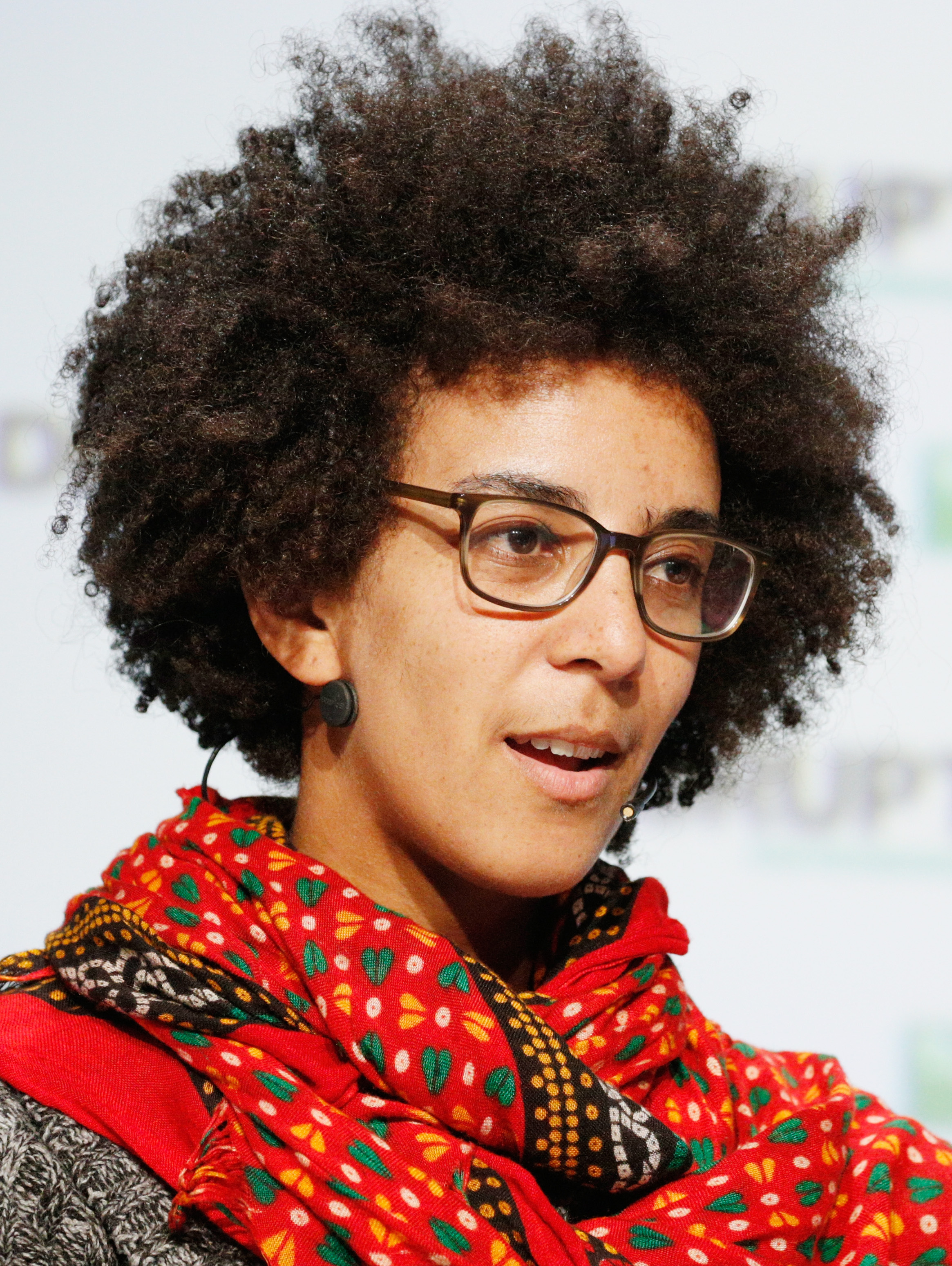
Founder, Distributed AI Research Institute (DAIR)
AI researcher and prominent voice on AI ethics, bias, and the risks of concentrated corporate control over AI development. Coach's note: Pairs well with the DAIR entry in the library — independent research, not corporate PR.

President, Patrick J
McGovern Foundation. Leads a $1.5B foundation investing $500M+ to make AI work for everyone; writes on responsible AI and equitable technology. Coach's note: Follow for where philanthropic AI funding is going — useful if you're seeking grants.
Philosopher, co-founder of effective altruism
Oxford philosopher and a co-founder of the effective altruism movement.
Key works not listed yet.
Full profile: arguments, achievements and library resources →
Turing Award laureate; chair of the International AI Safety Report
Professor at the Universite de Montreal and founder of Mila, who shared the 2018 Turing Award for deep learning. He now chairs the International AI Safety Report and founded the nonprofit LawZero.